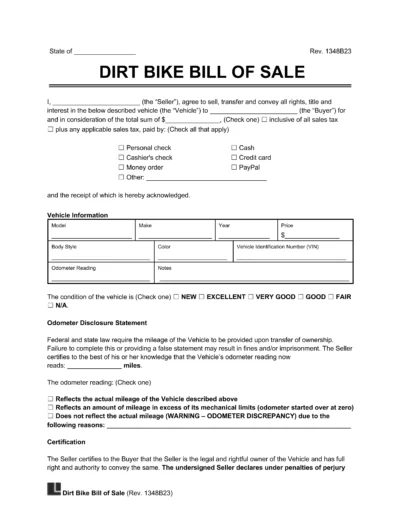


What Is a Dirt Bike Bill of Sale?
A dirt bike bill of sale is a legal document that records the sale and transfer of a dirt bike between a buyer and a seller. It lists key details like the make, model, year, VIN, and odometer reading, creating a clear record of the transaction. Some states require it for registration or title transfers, while others recommend it as proof of purchase and ownership.
When to Use a Dirt Bike Bill of Sale
A bill of sale isn’t required everywhere, but it’s often a smart idea. It proves ownership, protects both parties, and can save time if questions about the bike’s history come up later. It’s particularly important in situations like:
- Registering or titling a dirt bike in states that require it. For example, Virginia requires it for bikes over 50cc, while Colorado needs a notarized bill of sale for bonded titles or bikes 25 years or older.
- Private sales, especially when the dirt bike has been raced, rebuilt, or modified, since the document helps record its history and condition.
Even when it’s optional, filling out a bill of sale for a dirt bike adds extra protection for both sides. Rather than relying on a verbal agreement, a written record confirms ownership and makes future sales easier. Using a dirt bike bill of sale template walks you through the process so your sale is complete, accurate, and ready for registration.
If your state requires you to title or register a dirt bike, make sure you have the proper documents ready. Along with your dirt bike bill of sale, bring:
- The signed title from the current owner, if the dirt bike already has one
- The Manufacturer’s Statement of Origin (MSO) for new or untitled dirt bikes
- Proof of ID and proof of residency
- Payment for registration or title fees
Check your state DMV website for any extra steps. Some may ask for a VIN verification or additional paperwork if the dirt bike came from out of state.
How to Write a Bill of Sale for a Dirt Bike
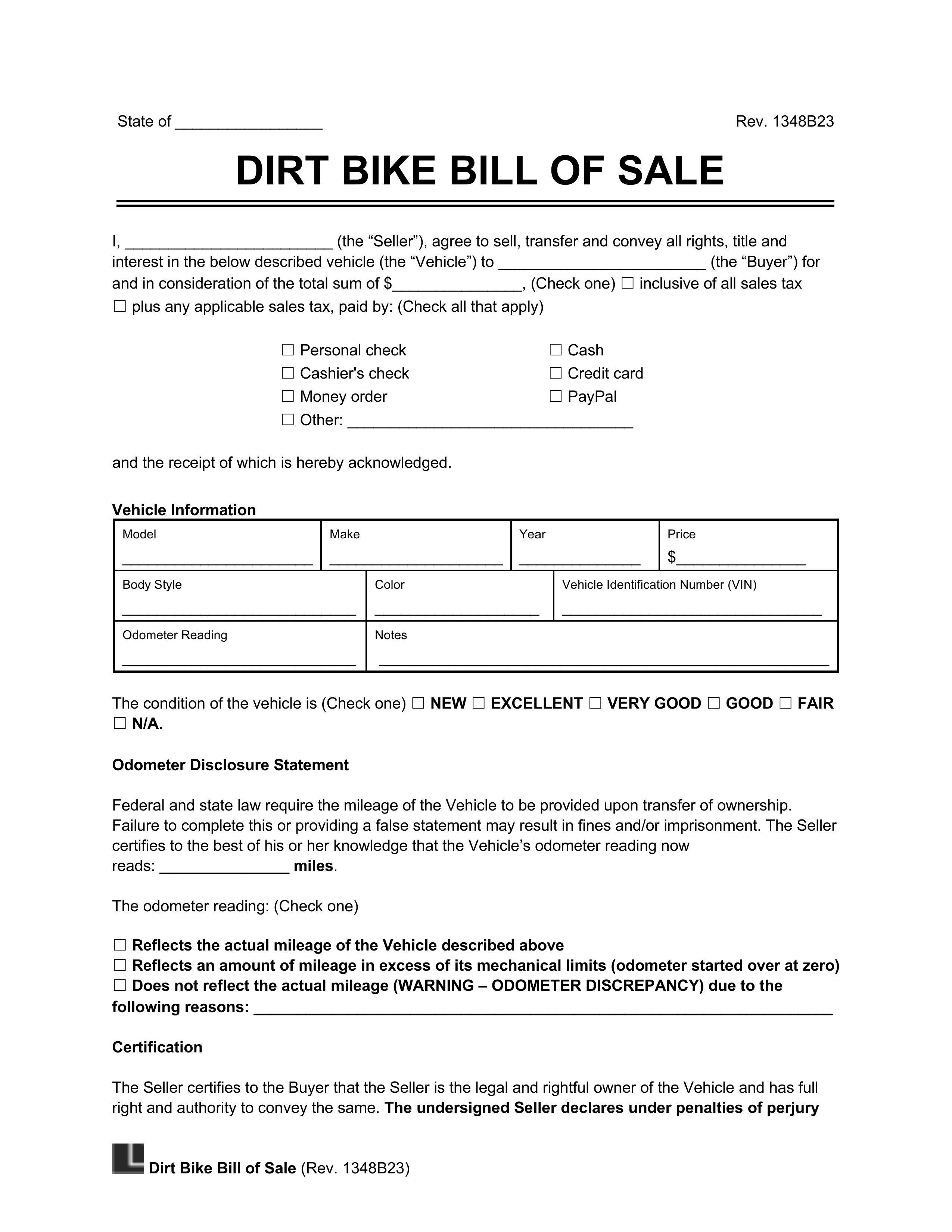
Because dirt bikes are typically sold privately, a bill of sale helps keep the sale straightforward and transparent. To make sure it’s valid, you’ll need to include the correct details in the dirt bike bill of sale. Here’s how to fill it out.
- Record the date of sale by writing the day the buyer pays and takes the dirt bike home. That date marks when ownership officially transfers.
- List the location of the sale by entering the state where it happens. This helps determine if the dirt bike needs a title, registration, or off-highway (OHV) sticker.
- Add the total sale price in US dollars. If the deal includes extras like a stand, ramp, or spare parts, include them in the total.
- Specify the payment method used for the sale. Many dirt bike transactions rely on cash or a cashier’s check, but money orders or PayPal are sometimes used.
- Confirm the warranty status by selecting “No.” Dirt bikes are almost always sold as-is because they’re built for off-road use and naturally show wear.
- Describe the dirt bike in detail by including the make, model, year, VIN or frame number, color, and engine size (cc). Mention upgrades such as a new exhaust, suspension setup, or plastics kit if they’re part of the sale.
- Record the odometer or hour reading, depending on the dirt bike. If there’s no odometer, select “N/A – no odometer” and include the hour meter reading if available. It shows true engine time.
- Enter the seller’s information exactly as it appears on the title or Manufacturer’s Statement of Origin. This verifies who owned the dirt bike before the sale.
- Add the buyer’s information, including their full name and address for registration or recordkeeping.
- Decide whether or not to notarize the bill of sale based on your state’s rules. Notarization adds an extra layer of proof, especially for untitled or older dirt bikes.
Once both parties sign, the dirt bike bill of sale becomes the legal proof of ownership, confirming the bike’s details, the sale date, and who now owns it.
Sample Dirt Bike Bill of Sale
See the sample dirt bike bill of sale below for reference. When you’re ready, download a free dirt bike bill of sale template in Word or PDF to fill out and finalize your sale.