What Is a New Hampshire Vehicle Bill of Sale?
A New Hampshire vehicle bill of sale is a legal document that confirms the sale of a vehicle. It shows who bought the car, when the sale happened, and what was agreed upon between the buyer and seller. This form helps both parties keep a record of the sale and may be used later if questions arise about ownership or the sale terms.
Per NH Rev Stat § 261:148, a New Hampshire motor vehicle bill of sale must contain the following details:
- The date of the sale
- The vehicle’s make, model, model year, and color
- The vehicle’s Vehicle Identification Number (VIN)
- The manufacturer’s year
- The type of body
- The number of cylinders
- The buyer’s and seller’s legal names, addresses, and signatures of the buyer and seller
The New Hampshire Division of Motor Vehicles (DMV) suggests using a bill of sale, especially for vehicles that don’t have a title. It can support your registration or help resolve future disputes. You can use a free customizable New Hampshire vehicle bill of sale template from Legal Templates. Just answer a few quick questions to fill in your details and download your form as a Word or PDF file.
When Do You Need a Motor Vehicle Bill of Sale in New Hampshire?
A vehicle bill of sale isn’t required for every transaction in New Hampshire, but it’s a good idea to have one. In some cases, you may be asked to show it to the DMV. You’ll likely need an NH motor vehicle bill of sale in the following situations:
- For Title-Exempt Vehicles: If the vehicle is a model year 1999 or older, a mobile home, or a trailer weighing less than 3,001 pounds, the DMV won’t issue a title. In such cases, a vehicle bill of sale helps establish ownership of the vehicle.
- To Support Registration Without a Title: If a vehicle title isn’t available, the DMV may ask for a bill of sale to process the registration and confirm the sale.
- For Personal Recordkeeping: By keeping a copy of the bill of sale, both the buyer and the seller can track exactly what they agreed on, such as the type of vehicle, sale price, and date of purchase.
- For Insurance or Legal Protection: A car bill of sale can help with cancelling insurance, proving ownership transfer, or handling any disputes after the sale.
If you’re selling an older car or a trailer without a title, the DMV will likely ask for a bill of sale. It’s your proof that the vehicle changed hands and protects you in case of disputes.
Does a New Hampshire Vehicle Bill of Sale Need to Be Notarized?
No, New Hampshire does not require notarization for most car bills of sale. The vehicle bill of sale is still valid as long as both the buyer and seller sign it. However, notarization is strongly recommended in some cases, especially when:
- The vehicle is title-exempt (like older cars or small trailers)
- The sale could lead to future disputes
- The buyer or seller is located out of state
Notarizing the document adds a layer of protection and may help avoid issues if the sale is ever questioned. You can use our free New Hampshire notary acknowledgment form to simplify the process.
If the vehicle was imported from another country, the New Hampshire DMV may ask for extra documents, like the HS-7 Declaration and a notarized bill of sale. Getting your bill of sale notarized ahead of time can help you avoid delays.
Sample New Hampshire Vehicle Bill of Sale
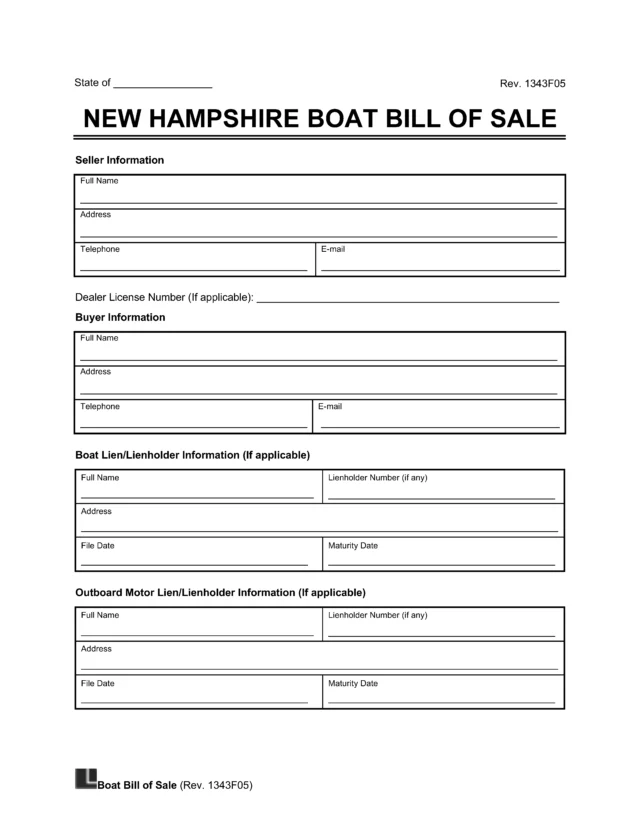
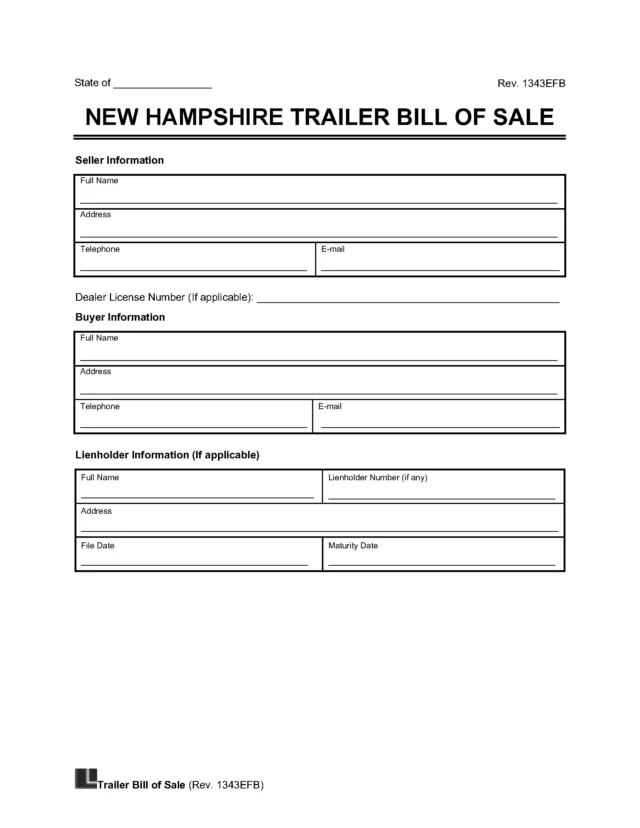
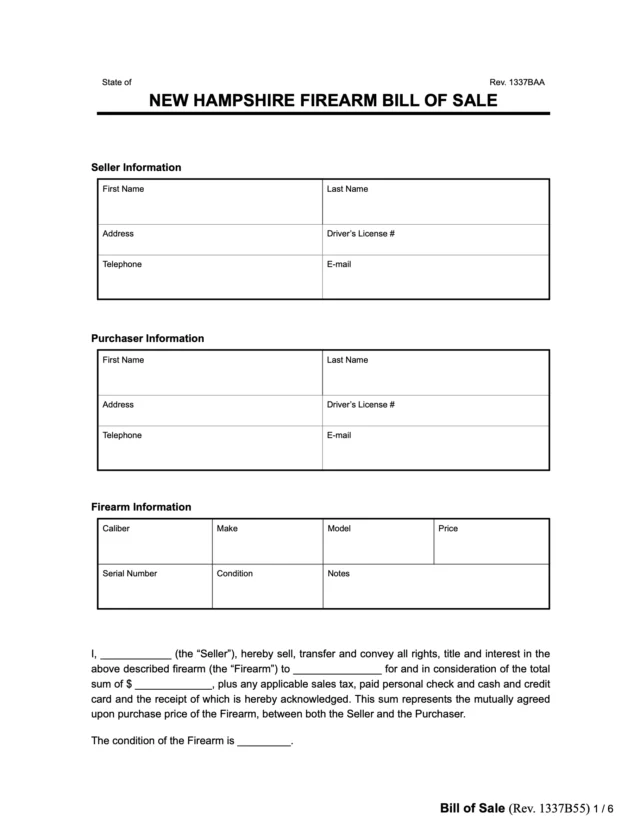
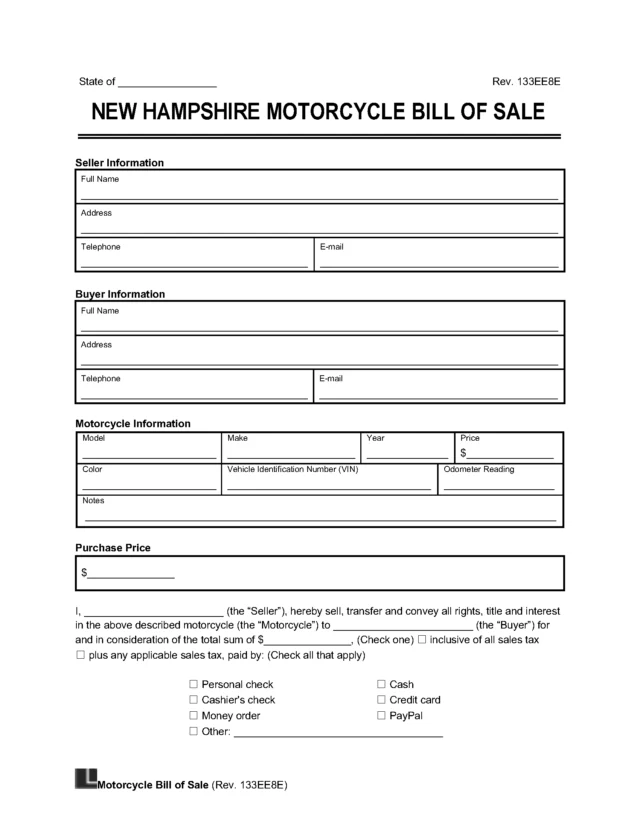
View a sample New Hampshire vehicle bill of sale form below to see what your completed form should look like. Then, fill out the form using our step-by-step questionnaire and download your motor vehicle bill of sale as a PDF or Word document. You can also get a printable NH vehicle bill of sale for your records.