What Is a Refund Demand Letter?
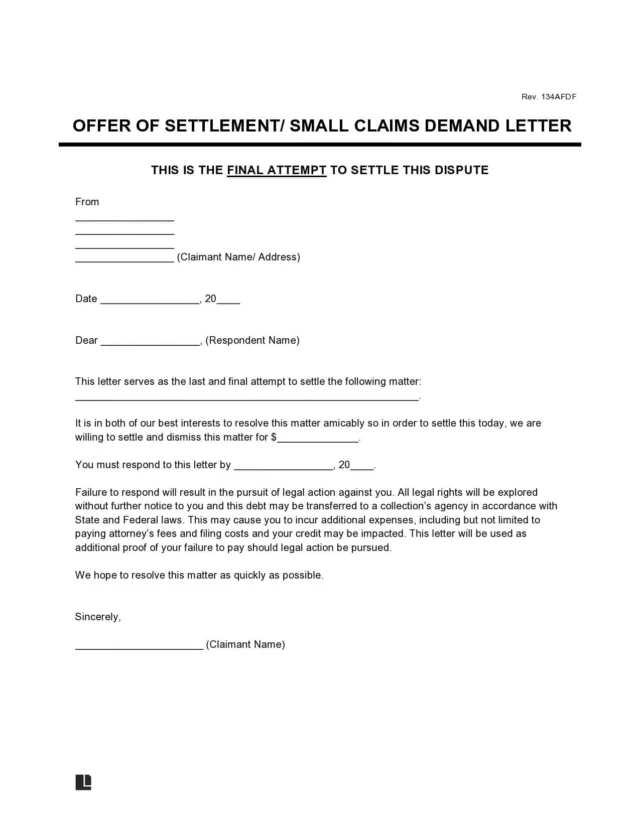
A refund demand letter lets you communicate your request for a refund when the goods or services provided to you were disappointing. As a consumer, you can send a request letter for a refund to an individual or business that facilitated an unsatisfactory sale.
Sending this letter is a final attempt to resolve the issue before resorting to legal action. When the recipient gets the letter, they’ll review the reasons provided and supporting evidence. If there’s enough information to justify a refund, the recipient can issue a refund.
This document is essential in creating a formal record of your complaint. It shows you made a good-faith effort to resolve the issue before pursuing a lawsuit. A compelling letter can show the recipient you’re serious about getting your money back. It may lead them to comply and let you avoid the cost and time of legal action.
When to Use a Refund Demand Letter
You can use a refund demand letter when you didn’t get what you paid for. Several situations may be cause for you to write and send a refund demand letter:
- The products you received were damaged or defective.
- The products you received did not match the product description.
- The services that you paid for weren’t provided or weren’t properly completed.
- The goods or services provider breached their refund policy.
You can demand a money refund, but the legal enforceability of your letter may depend on the following factors:
- The seller’s terms
- State consumer protection laws
- Any sales contract you signed
Federal laws can also support your claim to a refund. For example, if you bought something worth at least $25 during a door-to-door sales pitch, you can request a refund within three business days per the Federal “Cooling-Off Rule” (16 CFR. § 429). Another example involves plane ticket purchases. If an airline cancels or significantly changes a flight, you’re entitled to a proper refund under 49 US Code § 42305.
What to Do Before Writing a Refund Demand Letter
Before writing a refund demand letter, review these tips to increase your chances of obtaining a refund.
1. Review Applicable Laws
Review the refund laws in your state, plus local and federal laws, to determine your eligibility for a refund.
For example, suppose your sale took place in Florida. FL Stat § 501.142 requires sellers to display a “no refund” sign if they don’t allow refund applications. If the seller you bought from doesn’t have this sign, you have grounds to seek a refund with valid documentation. However, Florida sellers do not have to refund you for customized or perishable goods.
2. Check Company Policies
Look up the refund policies of the company you purchased from. If you signed a sales contract with an individual instead of a company, check the contract’s terms and conditions for refunds. You may have to meet certain requirements to be eligible for a refund, such as:
- Have proof of the purchase
- Show that the product is unopened or unused
- Be within a certain timeframe (like 60 days of the purchase date)
Some companies may outline that the sale was final or doesn’t apply to certain items.
3. Gather Evidence
Gather evidence to justify your refund of money. For example, the following evidence can help support your claim:
- Receipts from your purchase
- Signed contracts
- Pictures of the item’s broken parts
- Emails/communications with a service provider
The evidence you provide will depend on your circumstances. For example, suppose you’re requesting a refund because the item didn’t work as expected. In this case, you should acquire (1) a copy of the original product description that compelled you to make your purchase and (2) your explanation of how the item didn’t work as expected.
How to Write a Demand Letter for a Refund
Explore the key elements to include in your demand letter for a refund so you can clearly communicate your request:
- Payee details: Your details as the person who is seeking a refund.
- Payor information: The name and address of the person who may owe a refund.
- Item description: The item that needs to be refunded and the reasons why.
- Refund amount: The amount that the payee is requesting to be refunded to them.
- Due date: The date by which the payor must refund the amount requested.
- Payment method: The method (cashier’s check, cash, etc.) and location (account number or physical address) the payor must use to issue the refund
- Statement of consequences: A statement of the payee’s intent to pursue further legal action if the payor doesn’t comply with the terms of the money refund application.
Sample Letter for Refund of Money from a Company
View a free sample application letter for the refund of money to learn how to frame your request. Create your own using our guided questionnaire, then download it in PDF or Word format to distribute to the payor.
Example Refund Letter
Here’s an example refund letter from a payee requesting a refund for a defective phone:
August 27, 2025
Dear Mr. Jameson,
This letter is being sent to formally request a refund of $300 for the PhotonMax 2000 camera I purchased from CameraWorld on July 15, 2025. The camera arrived defective and does not function as advertised.
Please remit the full amount to my checking account via ACH transfer to account number 1122334455 at First National Bank, routing number 5544332211.
To support this request, I have attached:
- A copy of my receipt showing proof of purchase
- Photos of the defective camera
- Screenshots of the product description from your website
If full repayment is not received by September 10, 2025, further legal action may be taken against you. In addition to the amount requested herein, filing fees, attorney’s fees, and any other costs associated with obtaining the amount owed may be pursued.
Hopefully, this matter can be resolved promptly.
Sincerely,
Julia Thompson
Next Steps After Writing a Refund Letter
Once you write your application for a refund, you should send it via certified mail to confirm that the recipient gets it. Then, allow time for the recipient to review and process your request. Follow up if needed to provide additional information that supports your claim.
If the company refuses to grant a refund, review their explanation. If it’s unjustified, you can:
- Bring them to small claims or any other appropriate court
- Leave negative reviews of the company online
- File a consumer complaint with the office of the state attorney general
- File a complaint with the state consumer protection office
- File a complaint with the Better Business Bureau (BBB)