What Is a Response to a Demand Letter?
A response to a demand letter is a written reply you send after someone asks for money, action, or a settlement. It shares your side of the situation and responds to the claims in the original letter.
It also confirms you received the demand letter and states whether you agree, disagree, or want to negotiate. You can use it to explain what you plan to do next if the issue is not resolved. In some cases, a clear response to a demand letter can help avoid a lawsuit or prepare you if the dispute moves to court.
You don’t need a lawyer to send a response to a demand letter. However, it can still help to get legal advice when large amounts of money are involved, responsibility is unclear, the facts are disputed, or a lawsuit seems possible. Consider talking with a lawyer before replying if the situation feels serious or court action seems likely.
When Should You Use a Response to a Demand Letter?
Use a response to a demand letter when:
- You receive a formal demand for payment, action, or a settlement
- No lawsuit or small-claims case has been filed yet, and you still have time to respond
- You need to confirm receipt and address the claims, including whether you agree, dispute them, or want to negotiate
- Ignoring the demand could lead to legal consequences, such as added damages, fees, or the filing of a lawsuit against you
Replying sooner rather than later helps you explain your position and can sometimes stop things from escalating.
Make sure you understand what the sender is asking for and why. Look for a clear civil claim and the possibility of a lawsuit if the issue is not resolved.
Also, be careful if the letter threatens to report you to the police or expose you publicly to force payment. In rare cases, courts, including in California, have treated extreme threats like this as extortion.
How Do You Respond to a Demand Letter?
Once you receive a demand letter, the next step is deciding how to respond. Follow these steps to prepare your response:
- Start with the basic details. Include the date and the full names and addresses of both parties.
- State what the demand is about. Briefly describe the claim and the amount being requested, acknowledge receipt of the letter, and the sender’s position
- Say where you stand. Make it clear if you agree, disagree, or want to negotiate.
- Explain your side. Share the key facts and what you plan to do next.
- Add supporting proof if needed. Attach contracts, receipts, messages, or other documents.
- Ask for proof if the claim is unclear. Request records or documents that support the demand.
- Review payment details carefully. Check the contract, confirm the exact balance, look for late fees or deadlines, and state whether you will pay, dispute the amount, or request a payment plan.
A structured response to a demand letter makes it easier to explain what happened and what comes next. Legal Templates helps you build one that’s ready to send.
Decide your position before you respond to a demand letter. Your first reply can shape negotiation and possible litigation, and it may later be reviewed as evidence in court.
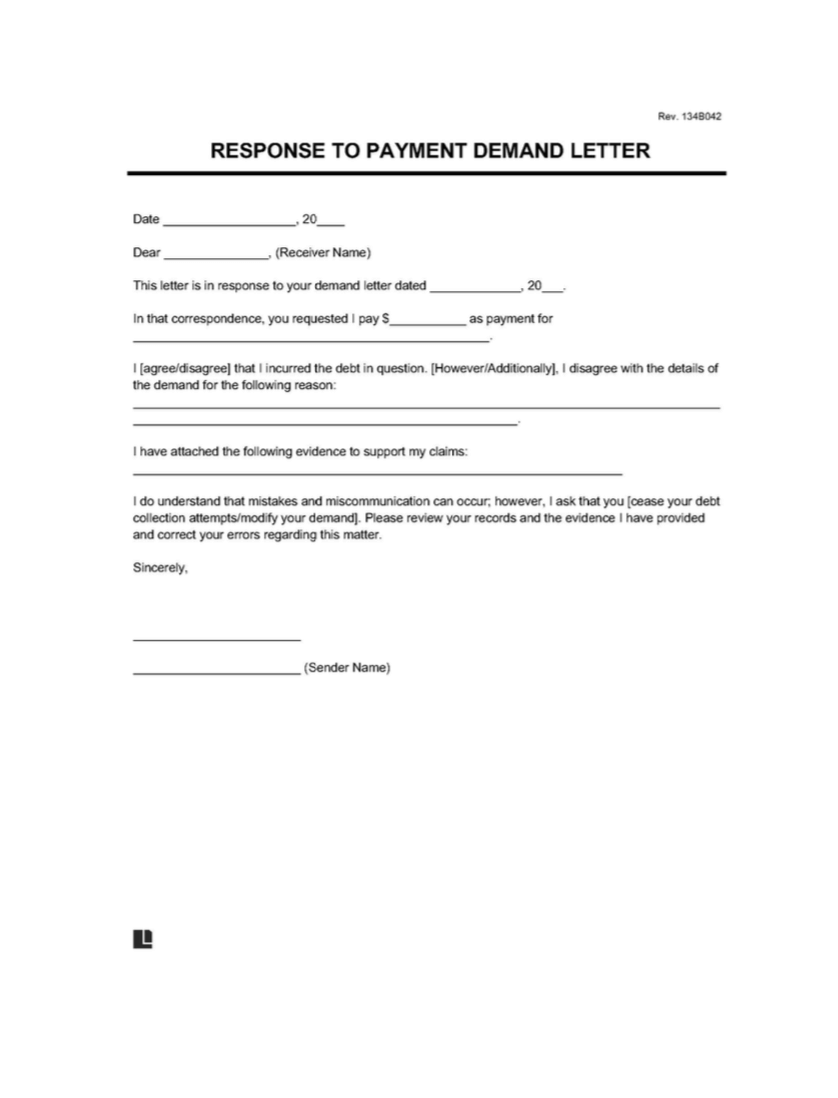
Sample Response to Demand Letter
Use this sample response to a demand letter as a starting point. Then, customize the template and download it as a Word or PDF file.