What Is a Videography Contract?
A videography contract is a legally binding agreement between a videographer and a client. It explains what video services will be provided, how much they cost, and what each party is responsible for during the project.
The main purpose of a videography contract is to set clear expectations in writing. It helps avoid confusion and disputes over payment timelines and the final video’s use. Written contracts are also generally easier to enforce than verbal agreements. This is because the terms are clearly documented.
Do I Need a Lawyer for a Videography Contract?
In most cases, you do not need a lawyer to create a basic videography contract. You can use Legal Templates’s free videography contract template to set up your agreement. You may want legal help if the project is high-value or involves complex licensing or commercial distribution. In those cases, a lawyer can review the agreement and help tailor it to your needs.
When to Use a Videography Contract?
You should use a videography contract anytime you are paid to create video content for someone. It is especially useful when working on a videography project that spans multiple filming dates, involves ongoing edits, or requires repeat deliverables. Even small projects can lead to misunderstandings if expectations are not clarified in writing beforehand. A videography contract is especially useful when you are hired to:
- Film a wedding, including ceremonies, reception, and highlight reels
- Create real estate videos, such as property tours or listing footage
- Produce commercials or product advertisements for a business or a brand
- Record personal or corporate parties, including fundraisers or company celebrations
- Film corporate events, interviews, or internal branding videos, such as training content or executive messages
- Deliver social media videos or ongoing content packages, where work is provided on a recurring basis
What to Include in a Videography Contract?
A videography contract should include the following key elements:
Parties Involved
Your videography agreement should specify the parties’ names and contact information. This includes the full legal names and contact information for the videographer and the client. If more than one client is involved, make sure you list them on the contract.
Description of Services
Your contract should provide a detailed description of the videography services you provide. This could include:
- Description: A detailed description of the services, including the type of video (e.g., wedding, promotional, event), length, style, format, etc
- Deliverables: Number of edited videos, raw footage, revisions, and file formats
- Timeline: Shooting dates, editing deadlines, and delivery dates
- Location(s): Where the shooting will take place
If you’re filming a live show, a performance contract dictates the terms of the act.
Payment Terms
Your videography contract should state:
- Total price for the videography services, including a breakdown of fees (e.g., shooting, editing, travel)
- Whether a deposit or advance payment is required
- When the remaining payments must be paid
- Accepted payment methods
- Whether late fees apply if payment is delayed
- Terms for either party canceling the contract
Usage Rights
This section should clearly explain who owns the video content and how it can be used. Be sure to specify:
- Whether the client owns the final video, the raw footage, or both
- How the client may use the video, such as for personal use, marketing, or commercial distribution
- Whether the videographer may use the footage in their portfolio or promotional materials
If the video includes identifiable people, the parties may also need a media release form to obtain permission to use the footage publicly or for marketing purposes. You can use Legal Templates’s free media release form to obtain consent for photo and video usage. In some cases, the client and videographer may also choose to sign a photo/video release form and a release of liability (waiver) form.
Cancellation and Assignment
Your videography contract should explain how the agreement can end or be terminated. Clearly explain whether either party has the right to cancel. Mention how the cancellation may affect payments already made or work already completed.
Additional Provisions
You can add additional clauses to your videography contract to add custom terms that are not covered elsewhere in the contract. You can include:
- Whether the videographer provides their own equipment
- Who is responsible if the equipment is lost or damaged
- Whether the videographer carries insurance, if required by a venue or client
- Confidentiality terms, if sensitive information is involved
- Force majeure events that excuse performance due to circumstances beyond either party’s control
Dispute Resolution
Include how disagreements will be handled. Mention whether disputes will be resolved through court litigation, mediation, arbitration, or a combination of methods.
Signatures
Your contract should have a section for the parties to print and sign their names. The written contract may be harder to enforce without a signature, so this section is essential.
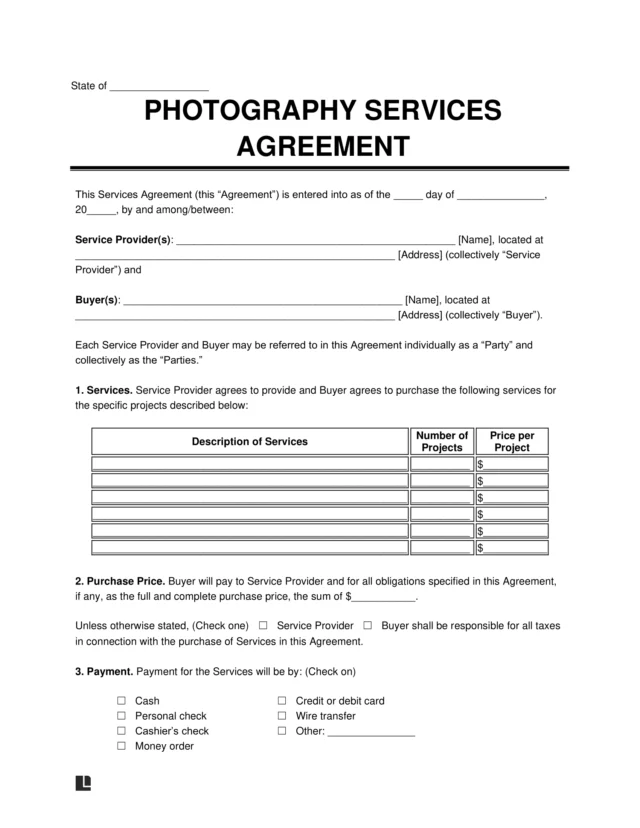
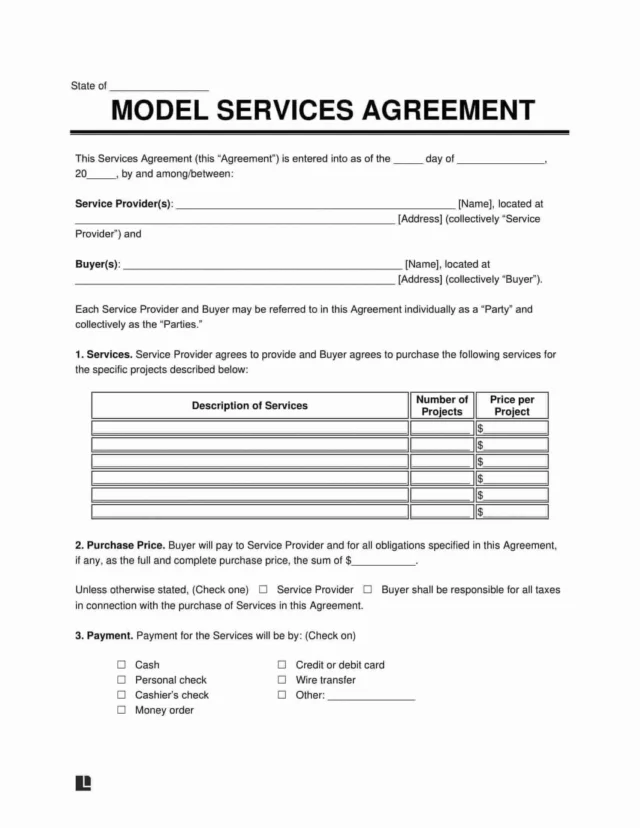
Sample Videography Contract
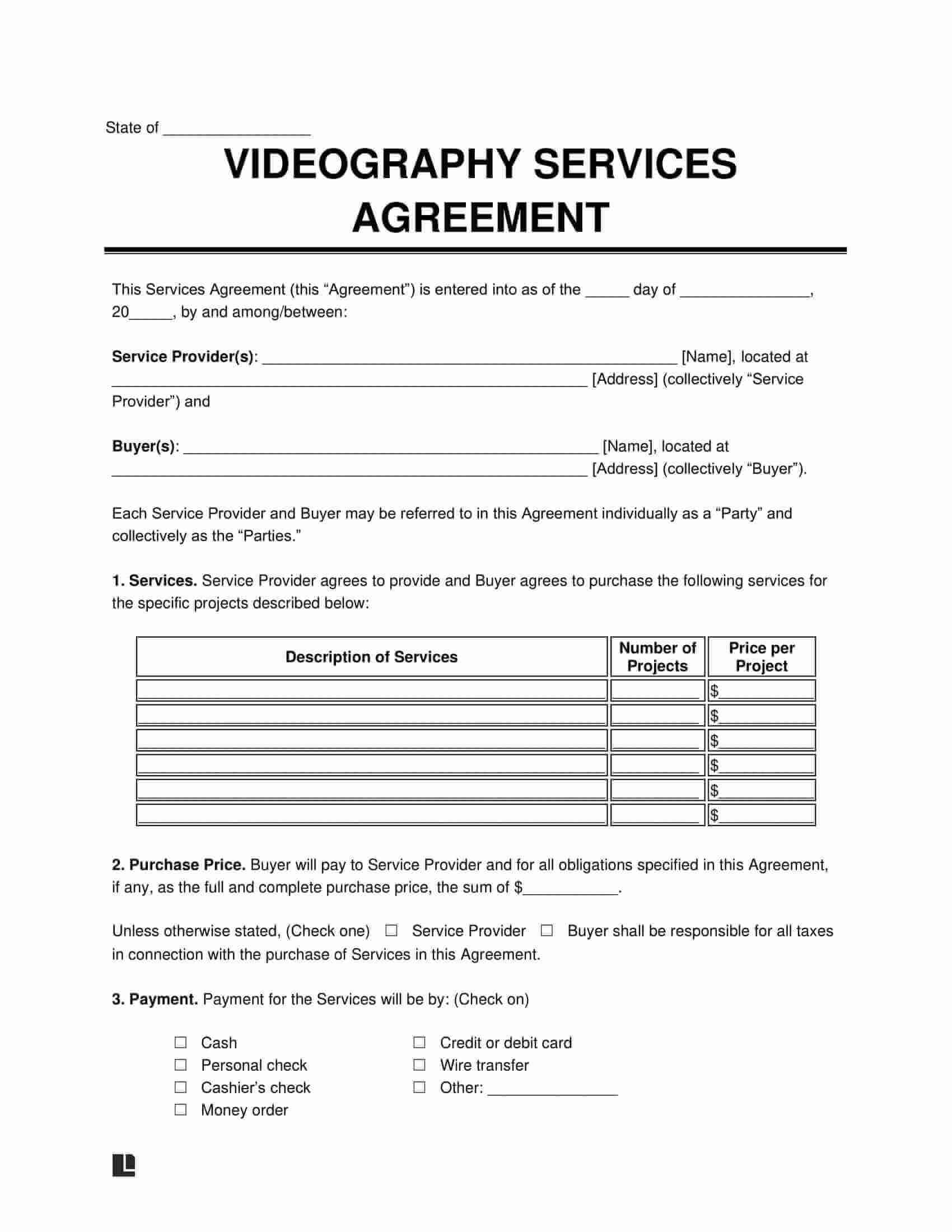
Take a look at the sample videography template below to understand how to structure your agreement. Then use our step-by-step questionnaire to create your own contract that includes all terms and conditions. Once you’re ready, download your free videography contract template in PDF or Word.