

What Is an End-of-Life Plan?
An end-of-life plan is a document that states your preferences for important decisions later in life. It can cover aspects like organ donation, the disposition of your remains, and funeral arrangements. You write it while you’re of sound mind so that your wishes are known when you’re incapacitated and after you pass away.
Note that an end-of-life plan is not legally binding. It’s simply a point of reference to guide your loved ones through the end stages of your life. While you can ask them to respect your wishes laid out in this plan, they are not obligated to uphold them.
An end-of-life plan does not override legally binding documents, such as a living will, last will, or advance directive.
Why Is End-of-Life Planning Important?
End-of-life planning is important because it gives you control over the final stages of your life, even when you’re no longer able to communicate. When you take charge of your end-of-life care planning in advance, you can:
- Reflect on your beliefs and make your own decisions about how you want to be memorialized
- Ensure your loved ones and care team know your preferences
- Preserve your values and religious customs
- Reduce the decision-making burden for your loved ones
- Reduce financial burdens (especially with planning for funeral expenses)
- Minimize conflicts among family members, as they’ll have clear instructions to follow
Round Out Your End-of-Life Plan
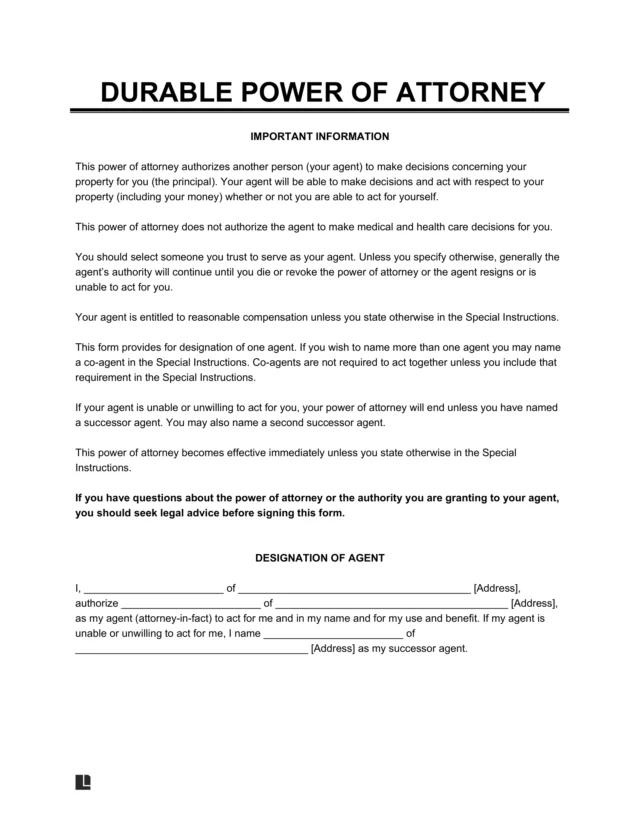
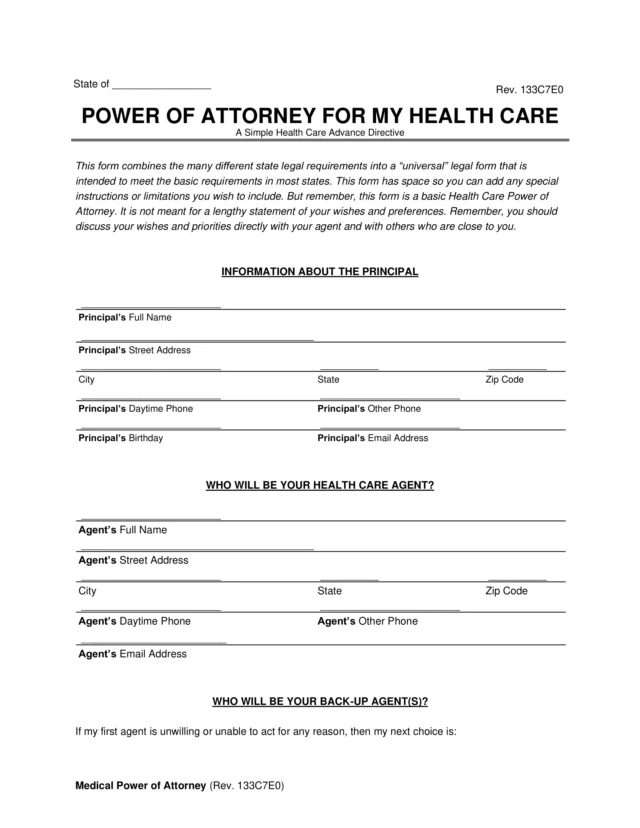
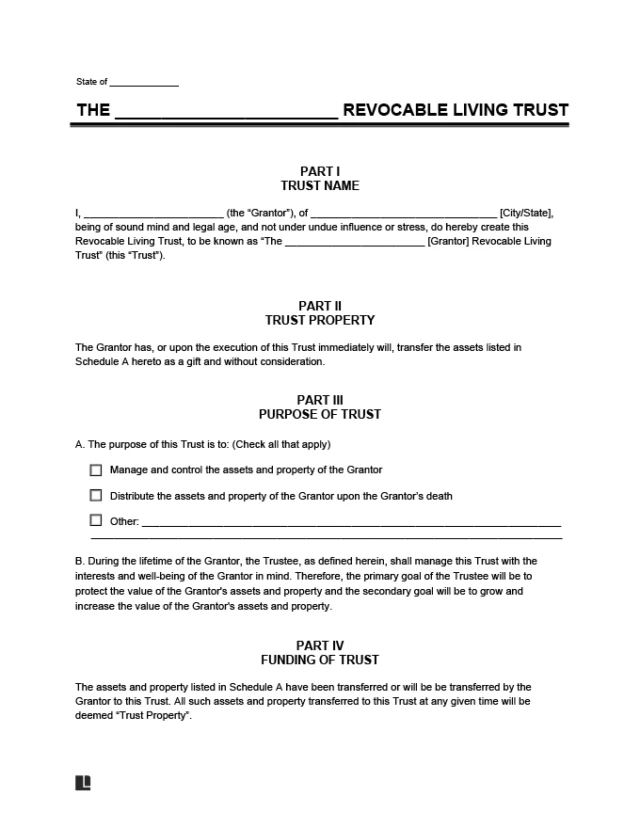
Our end-of-life plan template is a good place to start, but you can explore our other end-of-life documents to formalize your preferences.
How to Create an End-of-Life Plan
Writing a clear end-of-life care plan can help ensure your wishes are known and respected. Follow these steps to learn how to plan for the end of life.
Step 1 – Record Your Details
Record the state you live in or the state where you plan for the end of your life to take place. This matters because some states have laws about certain end-of-life matters, like who can make decisions about your remains.
Once you establish the governing state, get these details in writing:
- Your full name
- Your date of birth
- Your street address, city, and state
Step 2 – Name Your Representative
Name your representative, who is the person who will oversee your end-of-life plan and execute your wishes to the best of their ability. Provide their name, current city, and state to identify them. You can also name a secondary representative who can fulfill the role if your primary representative is unavailable.
When choosing your representative, ensure that you select someone you know well and trust to carry out your wishes as you’ve written them.
Is a Representative the Same as an Attorney-in-Fact?
A representative is not the same as a power of attorney. A representative in your end-of-life plan is someone you choose informally to carry out your wishes. An attorney-in-fact is someone you designate in a power of attorney to act on your behalf. An attorney-in-fact has legal authority to act for you, while a representative is someone who’s appointed in an unofficial manner.
Step 3 – Describe How You Want Your Body Laid to Rest
Explain how you’d like your body laid to rest. This choice is entirely up to you, as it’s a personal decision with no correct answer. You can decide based on several factors, including the cost, environmental impact, practical considerations, and your cultural and religious beliefs. Some options you can select in our guided form include the following:
- Burial
- Cremation
- Entombment
- Donation to medical science
You can also offer further instructions, like how you’d like your ashes dispersed or where you want your body to be buried.
Step 4 – Outline Your Ideal Service & Celebration of Life
Use your end-of-life plan to outline your ideal service:
- Funeral service
- Memorial gathering
- Graveside ceremony
- Religious service
- Non-religious service
- Private service
You can add your own if you prefer a different celebration of life. Legal Templates also helps you outline specific details about your service, such as:
- Whether you want an officiant or a clergy member to lead the service
- Whether you want particular readings, music, or traditions included
- Whether you want an obituary published
Step 5 – Leave Messages for Loved Ones
You have the option to leave messages for loved ones, which can give them closure or something to remember you by. The messages you leave in your end-of-life plan are up to you, but some ideas include the following:
- A general farewell letter expressing love
- Comforting words about dealing with grief
- An expression of gratitude for loved ones’ assistance during the final stages of your life
- Life lessons or words of wisdom
- A message about traditions you hope your family continues
- Favorite memories you want to share
Step 6 – Specify Organ & Tissue Donation
Declare whether you want to donate your organs and tissues after death. If you wish to donate, you can specify which organs and tissues you would like to exclude from your donation, if any.
Stating your preference for organ and tissue donation in your end-of-life plan is a good way to reiterate your wishes, but you must register with your state’s organ donor registry to make it official.
Step 7 – Include Financial Details for the Funeral or Burial
You can plan for your funeral or burial ahead of time to reduce the planning your family has to do and minimize the money they have to contribute. Specify a provider for funeral or burial arrangements so that your loved ones know who to contact. You should also give details for any insurance policies or funds that you’ve set aside for funeral and burial expenses.
Step 8 – Finalize & Sign
Sign your end-of-life plan as soon as you write it or at a later date if you plan to revisit it. Ensure that you include the appropriate date of signing.
Review Our Estate Planning Checklist
Review our estate planning checklist to ensure you cover all aspects of settling your estate, from planning your funeral to distributing your assets.
End-of-Life Care Plan Sample
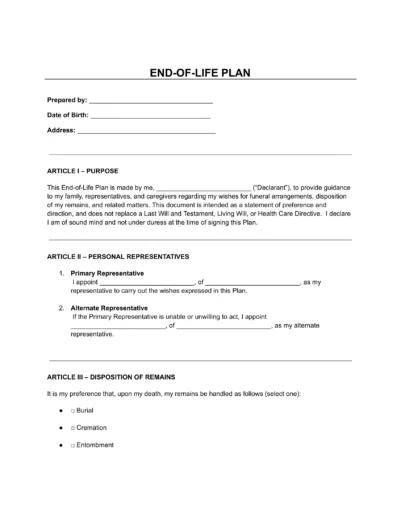
View a free example of an end-of-life care plan to get an idea of what elements to include. Record your preferences using our guided questionnaire, then download a copy in PDF or Word format. Print for distribution to your representative or store it in your records for safekeeping.