What Is a Modified Gross Lease?
A modified gross lease, also known as a base year model gross lease or a modified net lease, sits between a gross lease and a net lease. The tenant pays base rent plus a negotiated share of operating costs, while the landlord handles most building-wide expenses. This setup keeps monthly costs predictable. Here’s how it works in practice:
- Base rent stays steady.
- Certain operating costs get shared.
- Major building expenses remain with the landlord.
You’ll see modified gross leases mainly in multi-tenant office buildings. The structure suits spaces where tenants share common areas and services. It’s popular because it gives tenants cost clarity while letting landlords manage the bigger responsibilities.
How a Modified Gross Commercial Lease Works
A modified gross commercial lease sets base rent first, then adds the tenant’s share of operating costs. The tenant pays a set monthly amount, and both sides agree upfront on which expenses are shared.
Many leases follow a base year model. The landlord covers operating costs in the first year, and the tenant pays only the increases after that. Escalation clauses spell out how those increases work, and the tenant pays their proportionate share above the base year amount. Shared expenses often include:
- Utilities, insurance, taxes, and management fees
- Utility splits based on square footage or metered usage
- An expense stop that caps the landlord’s portion before increases shift to the tenant
This setup keeps base rent steady and gives both sides a predictable way to handle rising costs.
If you want to learn more about renting out commercial property or choosing the right tenant, check out these guides:
Who Pays What in a Modified Gross Lease?
A modified gross lease divides expenses by responsibility, and the breakdown stays consistent once both sides agree to the terms. Here’s how the costs usually fall:
| Landlord Pays | Tenant Pays | Shared (Negotiated) |
|---|---|---|
| Base property taxes and insurance | Utilities and interior cleaning | Certain maintenance tasks |
| Structural repairs | Minor interior repairs | Heating costs |
| Major maintenance | Share of operating expense increases | Management fees |
| Common-area upkeep | — | — |
This setup keeps major building costs with the landlord and everyday space-related costs with the tenant. Shared items sit in the middle, and the lease assigns them clearly so billing stays consistent and tied to real usage.
For a deeper look at how repair duties are usually divided, see our guide on Tenant and Landlord Responsibilities for Repairs.
When to Use a Modified Gross Lease
A modified gross lease works well in buildings that rely on shared systems. These properties often use common utilities and joint maintenance, which makes it hard to assign every cost to one tenant. The structure also fits when the landlord manages building-wide operations and needs a simple way to divide expenses.
You’ll see this format in markets where hybrid leases are standard. It’s also chosen when both sides want something more flexible than a strict gross lease or a strict NNN. The shared model keeps rent predictable and gives both parties a balanced cost structure.
Try a Modified Gross Lease When…
- The landlord handles major building expenses, and you manage smaller controllable items.
- Escalations follow a base-year formula, so increases are easy to track.
- You want a lighter structure than a full NNN lease.
- You want to avoid taxes, insurance, and major repair responsibilities.
Avoid a Modified Gross Lease If…
- You want full control over operating expenses and service providers.
- You do not want shared-cost formulas or escalation math.
- You want long-term costs with no pass-through increases.
- You prefer a setup where tenants carry all property expenses.
Modified Gross Lease vs. NNN
A modified gross lease splits expenses between both sides. The tenant pays fixed base rent and only covers increases above the base year, which keeps monthly costs steady.
A NNN lease shifts most operating costs to the tenant from the start. Taxes, insurance, and maintenance fall on the tenant, giving the landlord predictable income. These structures fit different types of properties:
- Modified gross works in multi-tenant buildings with shared systems.
- NNN suits single-tenant properties and national chains that want full control over expenses.
Overall, modified gross supports stable budgeting for tenants. NNN supports stable revenue for landlords. The best fit depends on how each side wants to handle operating costs.
How to Set Up a Modified Gross Commercial Lease
A modified gross lease needs clear numbers and well-defined cost splits. To build a lease that separates base rent from shared operating expenses, start with the following details:
- Set the property details by entering the property type and full address so the space links directly to the shared operating costs assigned to it.
- Define the size of the space by recording the square footage and the tenant’s percentage of the building for accurate base-year calculations.
- Flag the shared areas by marking common spaces, setting parking terms, and noting any storage that may affect utilities or upkeep.
- Identify the parties involved by listing the landlord and tenant and confirming who receives escalation notices.
- Set the lease dates by choosing the start and end dates that establish the base year used to measure expense increases.
- Enter the base rent by adding the fixed amount and setting the payment frequency and due dates.
- Outline the payment rules by adding the security deposit, payment method, grace period, and late fees.
- Add the renewal terms by noting any options that may change the tenant’s share or reset the base year.
- Confirm the modified gross structure by showing fixed base rent plus the tenant’s proportionate share of operating expense increases above the base year.
A quick review at the end keeps the cost split consistent. If the numbers line up, you’ll have a modified gross lease that tracks expenses cleanly and avoids billing friction later. Legal Templates also provides a free modified gross lease template that walks you through each step.
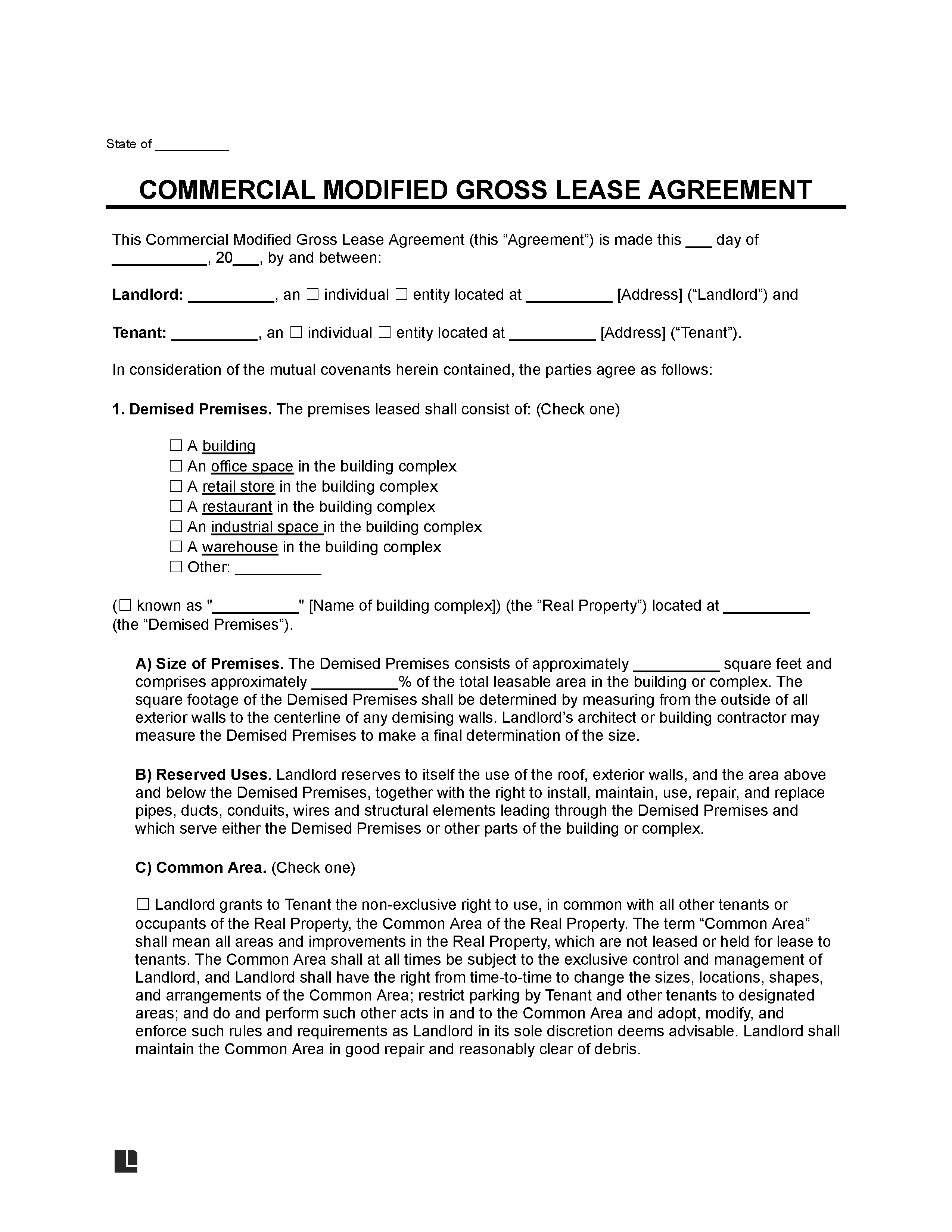
Modified Gross Lease Sample
See how a lease modified gross agreement looks in practice. The sample shows the base rent, shared costs, and base-year setup so you can review the structure before filling out your own. Once you’re ready, view the sample online and then customize and download it in Word or PDF.