What Is Percentage Rent in a Commercial Lease?
Percentage rent combines a fixed base rent with a share of the tenant’s sales. It’s commonly used in commercial leases, especially in retail settings where sales rise and fall throughout the year.
- The tenant pays a set base rent.
- They add a percentage of their in-store sales.
For example, a clothing shop may pay $3,000 in base rent plus 6% of sales made inside the store. This structure lets rent rise only when the business does well.
When to Use a Percentage Lease in Commercial Real Estate
A percentage lease works well when the property helps drive sales. Retail tenants often like it because they keep base rent lower and only pay more when revenue rises. It also suits businesses with steady sales patterns that want flexibility instead of a high fixed rate.
- It fits locations that meaningfully support the tenant’s ability to sell.
- It helps tenants who want a predictable base rent with performance-based rent added on.
Good Reasons to Choose a Percentage Lease
- Lower base rent
- Strong option for retail spaces
- Landlord shares in sales growth
- Location or upkeep brings in more customers
Reasons It Might Not Work Well
- Sales reporting required
- Landlord may audit records
- Rent can shift after the breakpoint
- Questions over what counts as gross sales
How a Percentage Lease Works
A percentage lease uses base rent as the starting point. The tenant pays that amount first. Percentage rent comes in only after sales pass the negotiated breakpoint.
- The breakpoint and percentage rate are set when the lease begins.
- The tenant reports sales, and the landlord can review those records.
- The percentage applies only to the sales earned above the breakpoint.
This setup keeps percentage rent tied to actual performance and avoids charging the tenant on their full revenue.
How Is a Percentage Lease Calculated?
The calculation starts by confirming the tenant’s base rent. That amount stays fixed each month, and percentage rent only begins once the tenant’s sales pass the break-even point, also known as the breakpoint.
- The breakpoint is the sales number the tenant must exceed before percentage rent applies.
- Many landlords use the natural breakpoint, which you find by dividing the annual base rent by the percentage rate.
- Both sides can also agree on a different number if they don’t want to use the formula.
- The percentage rate applies only to sales earned above the breakpoint.
- If sales stay below it, the tenant pays base rent only. If they pass it, percentage rent applies to the extra amount.
Formula:
Total Rent = Base Rent + (Sales Above Breakpoint × Percentage Rate)
Percentage Lease Example
Here’s how those rules look once you plug in real numbers:
- Base rent: $12,000
- Breakpoint: $50,000
- Percentage rate: 4%
- Monthly sales: $72,000
- Amount above breakpoint: $22,000
- Percentage rent: $22,000 × 4% = $880
- Total monthly rent: $12,880
If sales come in at $40,000, the breakpoint isn’t reached, and total rent stays at $12,000.
How to Write a Percentage Lease Agreement
A percentage lease changes with the tenant’s performance. That’s why the agreement needs clear definitions and a simple process for tracking and reporting sales. The steps below show how to put that structure in place.
1. Set the Base Rent and Percentage Rate
Start with the base rent, which is the minimum the tenant always pays. Once that’s set, choose the percentage structure, whether it uses a fixed or tiered rate. Then add the exact percentage applied to sales so both sides understand how variable rent works.
2. Choose the Breakpoint
Next, add the breakpoint, which is the sales number where the percentage rent begins. Many landlords use the natural breakpoint by dividing the annual base rent by the percentage rate.
Others prefer to negotiate a different number that fits the deal more naturally. For example, if annual base rent is $120,000 and the percentage rate is 4%, the natural breakpoint would be $3,000,000 in annual sales.
3. Define the Sales Included
After the breakpoint is set, describe which sales are treated as gross sales. Add any exclusions, such as refunds or employee purchases. Clear definitions help both sides measure revenue the same way and prevent reporting disputes later.
4. Set the Sales Reporting Rules
Once sales are defined, choose how often reports are due. Add the number of days the tenant has to submit each report, and match the timing to when the percentage rent must be paid. This keeps the process organized and predictable.
Make Sure Your Tenant Can Handle Reporting
Percentage leases rely on accurate sales tracking. Use our guide, Commercial Tenant Screening: How to Choose the Right Business Tenant, to confirm your tenant can manage reporting and financial obligations.
5. Add Audit Rights
If both sides agree, include a clause letting the landlord review sales records each year. This helps maintain accuracy and builds trust in the reporting process.
6. Choose the Percentage Rent Payment Schedule
Then decide when the percentage rent is paid. Monthly or quarterly schedules both work, as long as they align with the reporting timeline already in place.
7. Add Any Sales-Related Requirements
Finish by adding any rules that support accurate revenue tracking. This can include operating hours, how sales must be recorded, or point-of-sale expectations. Clear processes make the lease easier to follow and manage.
Need to End a Commercial Lease?
If you plan to end a business tenancy, use our free commercial lease termination letter to give proper notice and avoid misunderstandings.
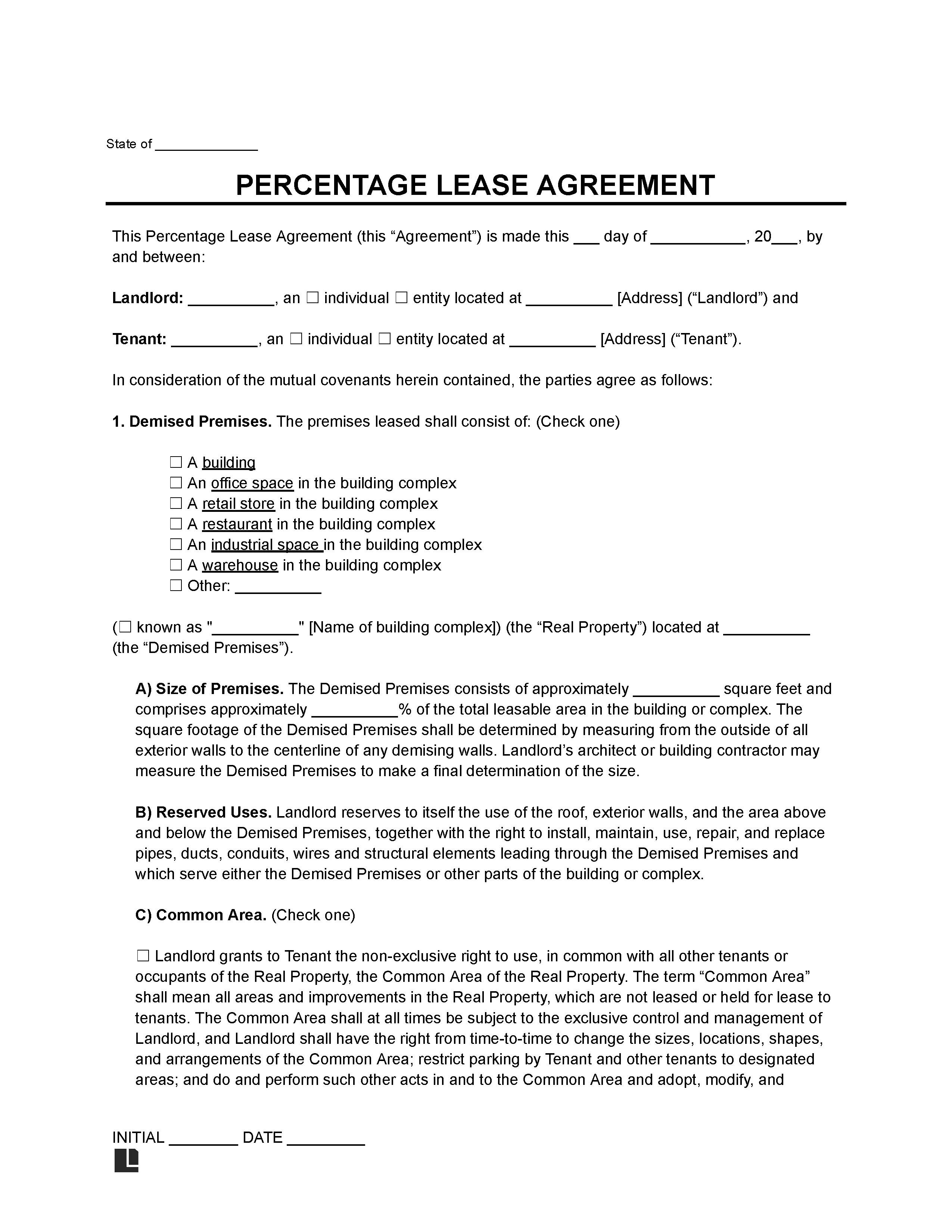
Percentage Lease Agreement Sample
It’s easier to understand a percentage lease when you can see a finished version. The sample below shows how the base rent, breakpoint, and reporting rules appear in a real agreement. You can review the sample now and customize it to meet your needs before downloading the template in PDF or Word.