What Is a Mississippi Lease Agreement?
A Mississippi lease agreement is a written contract between a landlord and a tenant that outlines the terms of renting a residential property, such as a home or apartment. It explains the amount of rent due, when it is due, and how long the tenant can stay. Lease agreements in Mississippi must follow the Mississippi Residential Landlord and Tenant Act (MS Code Ann Title 89, Ch. 8), which outlines each party’s rights and responsibilities.
For leases longer than one year, the Mississippi Statute of Frauds requires the agreement to be in writing. Both parties must sign and date the lease for it to be legally enforceable under MS Code 15-3-1. If your lease agreement doesn’t include a start and end date, Mississippi law assumes the agreement continues automatically based on how rent is paid. For example, a lease converts to a:
- Week-to-week tenancy, when rent is paid weekly
- Month-to-month tenancy, where rent is paid each month
Mississippi Landlord‑Tenant Laws Overview
| Topic | Rule | Mississippi Law |
|---|---|---|
| Rent Due Date & Grace Period | Rent due date as agreed upon within the lease. No grace period required by law | No specific statute |
| Security Deposit Return | Within 45 days after lease termination | MS Code Ann § 89-8-21 |
| Security Deposit Withholding | The landlord must give an itemized list of deductions | MS Code § 89-8-21(3) |
| Notice to Terminate (Month-to-Month) | Either party must terminate with 30 days' written notice | MS Code Ann § 89-8-19(3) |
| Eviction for Non-payment | Landlords must give a 3-day written notice to pay or vacate | MS Code § 89-7-27 |
| Entry Notice | Must give reasonable notice except in emergencies | No specific statute |
| Repairs and Maintenance | Landlords must keep the property habitable and make any necessary repairs | MS Code Ann § 89-8-23 |
| Tenant's Right to Repair and Deduct | Tenant may repair and deduct from rent if landlord fails to act within 30 days (limit: 1 month's rent) | MS Code § 89-8-15(4) |
| Retaliation Protection | Landlords cannot retaliate when tenants request repairs or report violations. | MS Code Ann § 89-8-25(4) |
Mississippi Lease Agreements By Type
Mississippi lease agreements vary based on the type of property and rental term. The six templates below cover common residential and commercial arrangements, including standard, rent-to-own, and month-to-month leases. You can customize each form to meet your specific needs while complying with Mississippi landlord-tenant laws.
Mississippi Standard Lease Agreement
Sets out the terms and conditions of a tenancy agreement between a landlord and a tenant for renting residential property.
Mississippi Commercial Lease Agreement
Creates a landlord-tenant relationship between a landlord and a business entity.
Mississippi Rent-to-Own Lease Agreement
Lets a tenant become a homeowner if they decide to pursue that option after their lease ends.
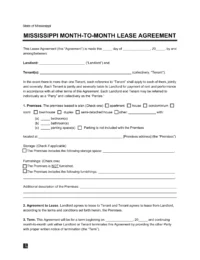
Mississippi Month-to-Month Rental Agreement
Provides residents with the option for adaptable month-to-month living arrangements, without the need for a long-term commitment.
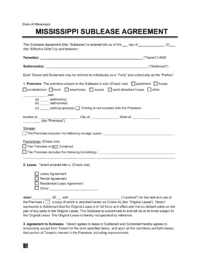
Mississippi Sublease Agreement
Establishes a formal agreement between the primary tenant (sublessor) and the sublessee, permitting the latter to temporarily reside in the rental property with the explicit approval of the landlord.
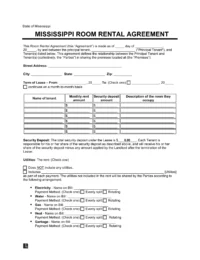
Mississippi Room Rental Agreement
Create a formalized living agreement by setting up a legally binding contract among a principal resident and fellow occupants.
Mississippi Security Deposit Laws
Under Mississippi law, landlords may collect a security deposit from tenants to protect against unpaid rent or property damage that goes beyond normal wear and tear.
Maximum Amount
There is no limit on how much a landlord can charge for a security deposit. The amount is typically based on factors such as the monthly rent, property type, and the tenant’s rental history. To avoid any misunderstandings, landlords should clearly state the deposit amount and refund conditions within the written lease agreement.
Holding Requirements
Mississippi law provides landlords with flexibility on how they store tenant deposits. They aren’t required to keep the money in a separate bank account or pay interest to the tenant (MS Code § 89-8-21). However, it’s still a good idea for landlords to track deposits carefully. Keeping records of when the money was received and returned can make resolving any end-of-lease issues much easier.
Returning Deposits
Landlords are required to return security deposits within 45 days after a tenancy ends. Deductions are only allowed for:
- Unpaid rent
- Repair costs for damages that are beyond normal wear and tear
Landlords must provide tenants with an itemized list of deductions explaining any deductions so the tenant understands how the amount was calculated (MS Code § 89-8-21(3)).
Penalties for Noncompliance
Tenants can take legal action to recover their deposit if a landlord fails to return it or provide a written explanation for any deductions. Under MS Code § 89-8-21(4), the tenant may also receive up to $200 in additional damages for bad faith withholding.
Rent Payment Rules in Mississippi
Mississippi law provides landlords and tenants with flexibility in setting rent terms. However, it outlines clear rules for due dates, late fees, and what happens if rent is not paid on time.
Rent Due Dates and Grace Periods
In Mississippi, rent is due on the date stated within the lease agreement. Tenants are expected to pay rent by this date. Mississippi law does not require a grace period, so landlords can charge a late fee as soon as rent becomes overdue, if the lease allows it.
Late Fees and Rent Control
Mississippi does not have statewide rent control. Landlords can raise rent at their discretion, but they must follow proper notice requirements. For month-to-month tenancies, landlords must give at least 30 days’ written notice before increasing rent or ending the lease (MS Code § 89-8-19(3)).
Withholding Rent
In Mississippi, tenants typically cannot stop paying rent, even if there are outstanding repairs. However, under MS Code § 89-8-15, tenants can use a limited repair and deduct rule under certain conditions:
To qualify:
- The tenant must send the landlord a written notice explaining what needs to be fixed. The repair in question must be a substantial violation of the lease.
- The landlord has 30 days to respond and make the necessary repairs.
- If the landlord does not fix the problem, the tenant can hire someone to make the repair and subtract the cost from the next month’s rent.
The total deduction cannot exceed one month’s rent, and tenants are only entitled to use this remedy once every six months. This rule, however, only applies if the tenant is up to date on rent and has not caused the damage.
Non-Payment and Eviction Notice
In the event a tenant fails to pay rent, landlords can provide a three-day written notice to pay or vacate before filing an eviction in court. This rule applies to both residential and commercial properties (MS Code § 89-7-27).
Landlord’s Right to Enter in Mississippi
Under MS Code § 89-8-25, landlords in Mississippi may enter a rental unit to make repairs, inspect the property, or show it to prospective tenants. However, Mississippi law protects tenants from unnecessary entries.
Reasonable Notice
Mississippi law does not specify a fixed notice period for a landlord’s non-emergency entry into a tenant’s premises. Usually, a 24-hour notice is considered reasonable notice, but it is not a statutory requirement. Landlords may enter without notice in emergencies or as permitted by the lease. Entry should occur at a reasonable time of day and only for legitimate reasons, such as inspections or maintenance.
Emergency Access
Landlords are not required to provide notice in emergencies that pose a threat to health or safety. For example, landlords can enter the property in case of a fire, gas leak, or water damage.
Limits on Landlord Entry
Landlords in Mississippi cannot use entry to harass or intimidate tenants. They also can’t perform “self-help” evictions, such as changing locks or removing a tenant’s belongings without a court order. Only a judge can legally authorize eviction or removal.
Mississippi Property Repair and Habitability Laws
Both landlords and tenants in Mississippi have responsibilities for repairs (MS Code § 89-8-23, MS Code § 89-8-15). These laws outline the repair and maintenance standards every Mississippi residential lease agreement must follow.
Landlord’s Responsibilities
Landlords are required to maintain the property in safe and habitable condition throughout the lease term. Their duties include:
- Following local building and housing codes that affect health and safety.
- Repairing essential systems, such as heating, plumbing, and electrical.
- Maintaining clean and secure common areas for all tenants.
Landlords are expected to respond to tenant repair requests within a reasonable time to avoid health and safety risks.
Tenant Responsibilities
Tenants must take reasonable care of the property and notify the landlord promptly of any repairs that may be required. They are required to:
- Keep the unit clean and sanitary
- Use appliances, plumbing, and electrical systems properly
- Report repair issues in writing and as soon as possible
- Avoid damaging the property or allowing guests to cause harm
If a tenant causes damage, they are usually responsible for paying for repairs or restoration.
Abandonment
Mississippi law doesn’t specify how long a tenant must be gone before a property is considered abandoned. However, if a tenant stops paying rent and appears to have vacated the property, the landlord may initiate legal steps to regain possession after providing written notice in accordance with court procedures. The same repair and habitability standards apply to any Mississippi rental lease agreement, whether it’s a month-to-month or long-term tenancy.
Required Lease Disclosures in Mississippi
Lead-Based Paint Disclosure
Under 42 US Code § 4852d, landlords must disclose whether a rental property built before 1978 contains lead-based paint or related hazards. These rules apply to almost all Mississippi rental lease agreements.
Landlords must:
- Give tenants a lead-based paint disclosure form
- Share any known information about the presence of lead-based paint
- Provide the EPA-approved pamphlet
Before Moving In
Tenants should complete a rental inspection checklist to record the property’s condition. This protects both parties in the event that questions arise about damage or deductions later on.
Sample Mississippi Lease Agreement
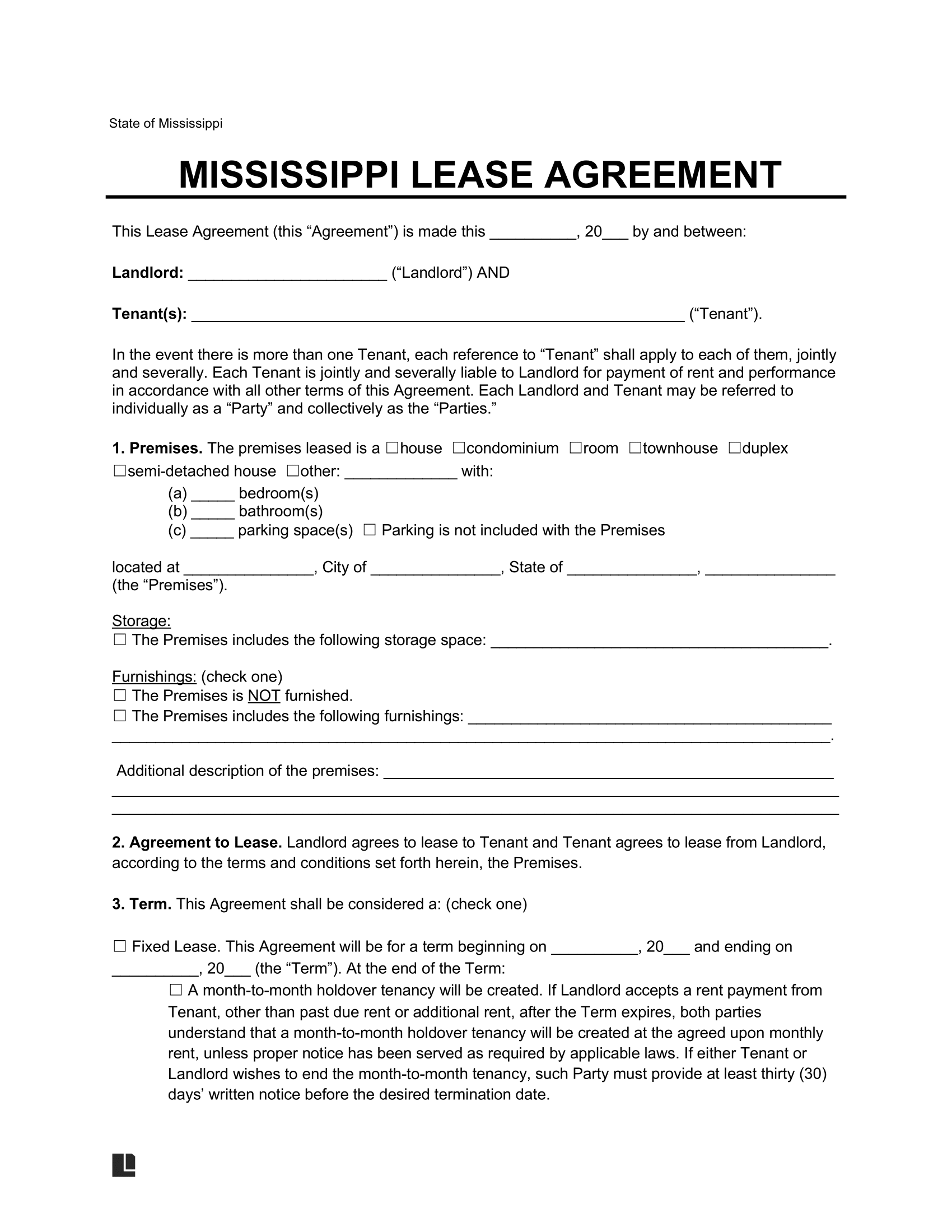
View a sample Mississippi lease agreement template below to see what’s included. Then, use our step-by-step questionnaire to create your own Mississippi rental lease agreement and download it instantly in PDF or Word format.