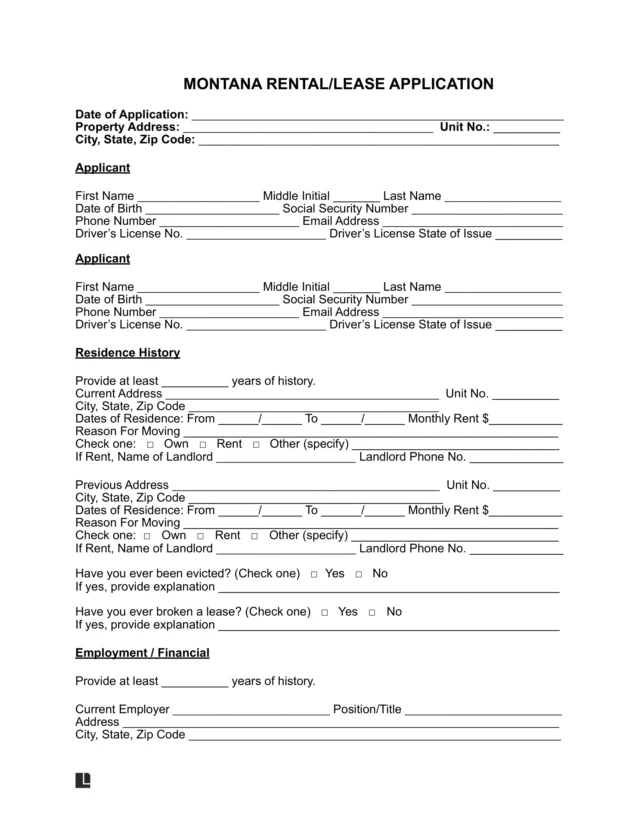
What Is a Montana Lease Agreement?
A Montana lease agreement is a legal document that allows a landlord to rent out a property and state all the terms for their tenant. It outlines the lease term, monthly payment, utilities, parking, late fees, and other elements. A written agreement is easier to enforce and makes all rental property conditions clearer.
Montana Landlord-Tenant Laws Overview
Your Montana residential lease agreement must comply with the state’s laws. Review the most important Montana landlord-tenant regulations to ensure your lease holds up in court.
| Topic | Rule | Law |
|---|---|---|
| Security Deposit Maximum | No maximum amount | n/a |
| Security Deposit Returns | Within 10 days (if no deductions are needed) Within 30 days (if deductions are needed) | MT Code § 70-25-202 |
| Security Deposit Storage | No requirements | n/a |
| Late Fees | Any amount | n/a |
| Landlord Entry | At least 24 hours' notice | MT Code § 70-24-312 |
| Lease Termination | 30 days' notice | MT Code § 70-24-441 |
Types of Montana Lease Agreements
Montana lease agreements can vary in content based on the property type or lease duration. Browse our various Montana rental agreement templates and select the one that best suits your situation.

Montana Standard Lease Agreement
By signing this document, both the landlord and tenant agree to abide by the terms and conditions for renting a residential property.
Montana Commercial Lease Agreement
Permits an entity to enter into a tenancy so they can use a property for business purposes.
Montana Rent-to-Own Lease Agreement
Establishes a traditional lease agreement and lets the tenant buy the property at the end of the rental period if they want to.
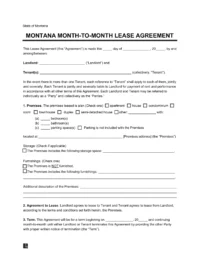
Montana Month-to-Month Rental Agreement
This agreement is subject to monthly renewal, with no specified termination date.
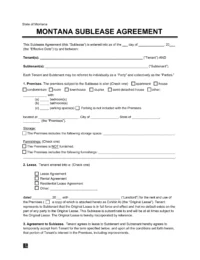
Montana Sublease Agreement
A secondary leasing arrangement is established, maintaining the primary tenant's responsibility to the original landlord.
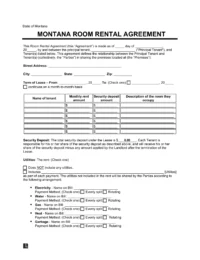
Montana Room Rental Agreement
Allows tenants to establish usage guidelines and financial commitments for a rented room within a larger space
Security Deposit Rules in Montana
Montana law isn’t as strict with security deposit rules as other states. It does not regulate the maximum amount, so landlords can charge whatever they’d like. Plus, landlords do not have to provide security deposit receipts, store deposits in a separate bank account, or pay interest on them to tenants.
However, there are some regulations for returning security deposits. If the property’s condition is in good shape upon moving out, a tenant is entitled to receive their entire security deposit within ten days. If the landlord needs to make deductions, they must provide the tenant with an itemized statement and the corresponding funds within 30 days (MT Code § 70-25-202).
Montana Rent Payment Regulations
Tenants typically must pay rent on the first day of each rental period unless the Montana residential lease agreement states otherwise. Landlords can charge any amount for rent, as state law bans rent control for private property.
If a tenant is late on rent, a landlord can charge any amount in late fees, so long as it’s reasonable and written in the Montana rental contract. Landlords must provide three days’ notice before evicting a tenant for non-payment of rent (MT Code § 70-24-422).
Additionally, tenants may make repairs costing up to one month’s rent and deduct the cost from their rent if the landlord does not act in a reasonable time after receiving notice of the need for repairs. For emergency repairs, tenants must use qualified repair professionals (MT Code § 70-24-406).
Landlord Entry Laws in Montana
Unless there’s an emergency, a landlord must provide the tenant with at least 24 hours’ notice before they enter the property (MT Code § 70-24-312). Any entry must be at a reasonable time of the day.
Montana Landlord and Tenant Property Repair Responsibilities
Landlords must ensure that rental properties are livable and adhere to health and safety standards. This includes making timely repairs and maintaining essential services such as heating, water, and electricity (MT Code § 70-24-303).
Tenants are expected to keep the rental property clean and safe, use fixtures properly, and adhere to health and safety codes (MT Code § 70-24-321). If the tenant abandons the unit, the landlord must make reasonable efforts to find a replacement tenant (MT Code § 70-24-426).
Required Lease Disclosures in Montana
Familiarize yourself with the disclosures a landlord must include in a lease agreement in Montana:
- Lead-based paint. A landlord renting a residence built before 1978 must include a notice stating that the property may contain harmful lead-based paint, along with an informational pamphlet (42 US Code § 4852d).
- Methamphetamine production. A landlord must notify a tenant if the property was once used for producing methamphetamine (MT Code § 75-10-1305(3)).
- Presence of mold. A landlord must declare they don’t have knowledge of mold on the premises (MT Code § 70-16-703). If applicable, they must provide records of any past instances of mold on the property.
- Move-in checklist. Once a tenant provides a landlord with a security deposit, the landlord must provide a move-in checklist (MT Code § 70-25-206). The tenant can use this document as guidance to inspect the property themselves and check for any existing damage.
- Manager information. The landlord must include the contact information of the manager who has permission to enter the premises (MT Code § 70-24-301).
Terminating a Lease in Montana
In Montana, either party may terminate a month-to-month tenancy by providing 30 days’ written notice before the end of the rental period (MT Code § 70-24-441).
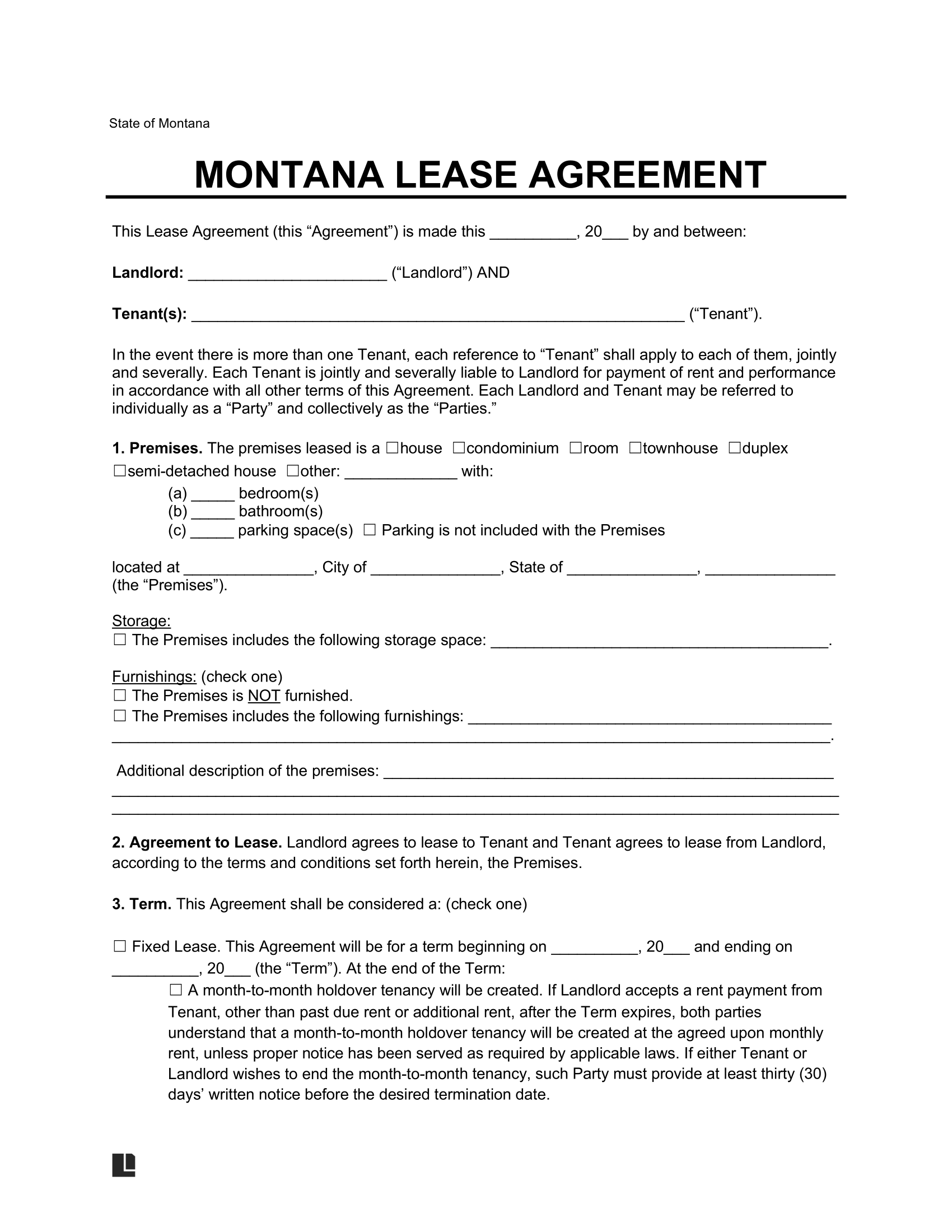
Montana Lease Agreement Sample
View our free Montana lease agreement sample to see what terms and conditions to include in your rental contract. Then, write your own using our questionnaire, and download a copy as a PDF or Word document.