What Is an Independent Contractor Non-Compete Agreement?
An Independent Contractor Non-Compete Agreement prohibits hired contractors from working in the same industry as an employer for a limited period of time and in a particular geographical area. Independent contractors are valuable workers who help businesses succeed, but a non-compete may be necessary to protect your business.
Key Provisions
- Party contact information
- Effective date of the contract
- Duration of the contract
- Geographical limitations of the agreement
- Non-compete language and limitations
- Assignment provision
- Governing law section
- Signature lines
Are Non-Compete Agreements Enforceable Against Independent Contractors?
Non-compete agreements are enforceable against independent contractors in most states. North Dakota, California, Washington, DC, and Oklahoma are exceptions, as these states limit non-compete agreements against independent contractors in most situations.
In states that permit non-compete agreements, they are subject to certain limitations. State law varies, but most non-compete agreements are subject to reasonableness limitations. Non-compete agreements must be limited in time and geographical scope. They should only limit competition during the contractor’s time working with the company and for a reasonable time after leaving work.
Courts typically limit the geographical scope of these agreements as well. For example, a non-compete may limit competition within a tri-state area, but it may be impermissible to prohibit competition nationwide. Every agreement is different and subject to your jurisdiction’s unique state laws.
IMPORTANT: Proposed Ban on Noncompete Clauses
The Federal Trade Commission (FTC) has proposed a new rule to ban employers from imposing noncompete clauses on their workers. Under the proposed rule, employers must rescind existing noncompete agreements and inform workers of their cancellation. This will also apply to independent contractors.
Under the proposed rule (yet to come into effect), employers must rescind existing noncompete agreements and inform workers of their cancellation. However, on August 20, a federal judge in Texas preliminarily delayed the FTC rule from taking effect on September 4, 2024.
How To Write
To write a non-compete agreement for an independent contractor, you’ll want to follow the step-by-step instructions below:
Step 1 – Add Party Contact Information
Correctly identify each party. This will include the independent contractor and the company hiring that contractor. The details you should add to the contract include the following:
- Names and titles
- Addresses
- Phone numbers
- Email addresses
Step 2 – Set an Effective Date and Duration for the Agreement
The effective date sets when the agreement becomes enforceable. The contract should list the date so the contractor knows exactly when it applies.
The contract should also include the duration of the non-compete provisions. These usually cover the entire time the contractor works for your business and a reasonable period after terminating employment.
Step 3 – Set Geographical Limits
The agreement should set reasonable geographic limits. Geographical limits refer to the area where the independent contractor cannot compete. State law generally requires a reasonable and limited geographical reach for your non-compete. The smaller the geographical location your contract applies to, the more likely it is to be found reasonable.
To determine an appropriate geographical limit, you should focus on areas where your competitors are and where they do business. Be specific about your agreement’s geographical limitations. Vague agreements may be unenforceable.
Step 4 – Set the Non-Compete Guidelines
A non-compete agreement should be as specific as possible to your industry and the work the independent contractor will perform. The contract should limit competition in the same type of work or the same type of position with another company. It may even list specific competitors, if applicable.
The non-compete language should be specific to the contractor. It should speak to contractor specialization and any unique attributes regarding their employment.
Step 5 – Set Governing Law
The contract should identify which state’s laws apply to the interpretation of the agreement. This is especially relevant in the era of remote work, where your independent contractor may be across the country. The contract can designate which state’s laws apply to the agreement.
Step 6 – Add an Assignment Provision
An assignment provision ensures that the non-compete agreement transfers if your company is sold. The buyer can still enforce the agreements.
Step 7 – Add Signature Lines
A signature section is crucial to an enforceable agreement. The contract should include lines for the company and the independent contractor. This should include the following:
- A line for each party’s printed name
- A line for each party’s signature
- A line for the date
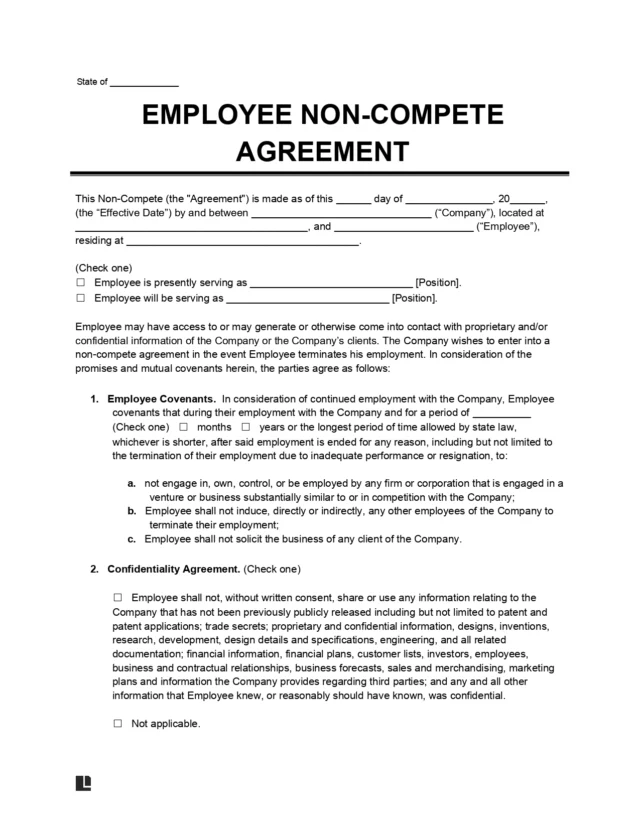
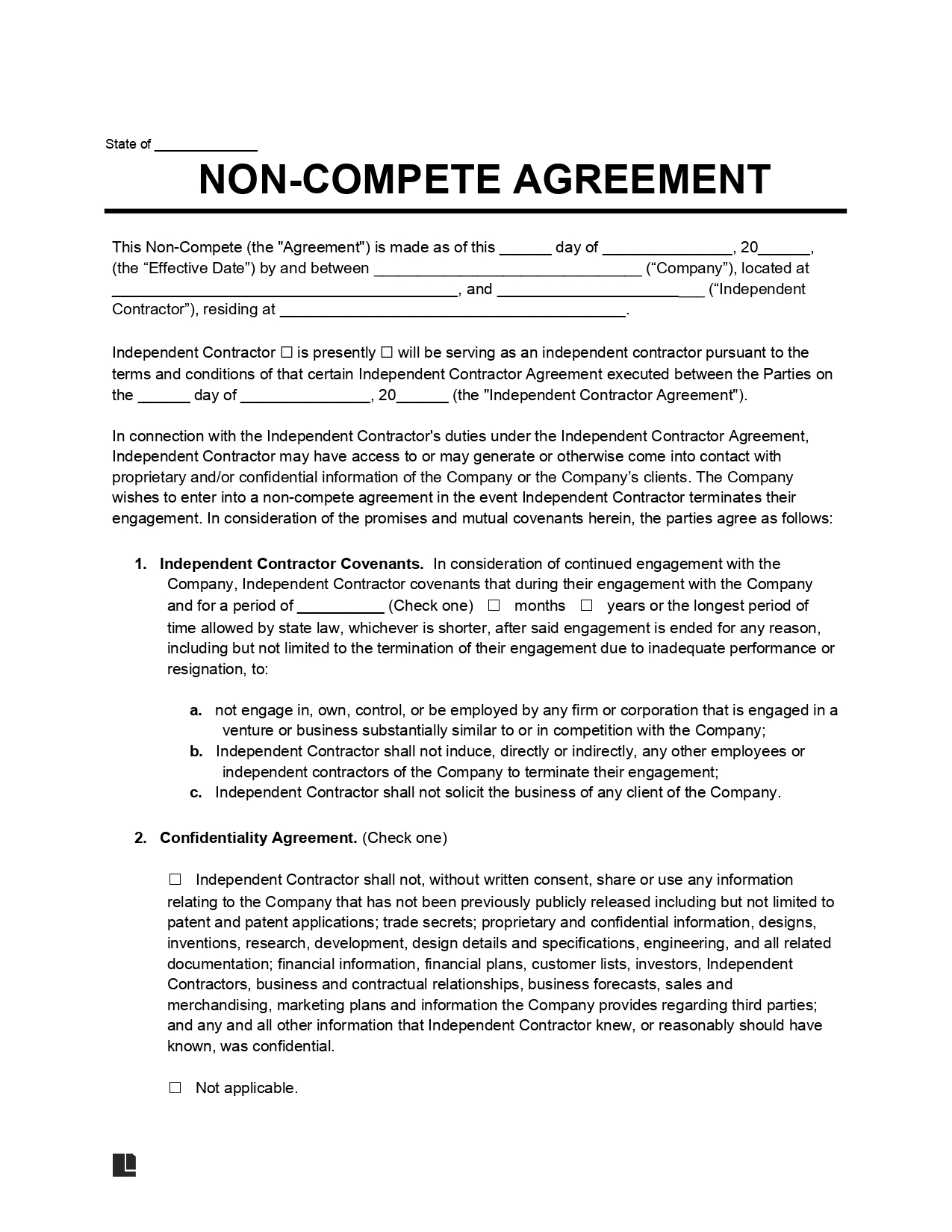
Independent Contractor Non-Compete Agreement Sample
This sample independent contractor non-compete agreement can be downloaded in Word and PDF.
Frequently Asked Questions
Can an independent contractor negotiate the terms of a non-compete agreement?
Yes, the terms of a non-compete agreement can be negotiated before the independent contractor signs it. If there are terms the contractor finds overly restrictive or unfair, they can try to negotiate a more favorable agreement.
What happens if an independent contractor breaks a non-compete agreement?
If a non-compete agreement is broken, the company can take legal action against the contractor. Potential consequences can range from monetary damages to an injunction preventing the contractor from continuing the infringing activity.