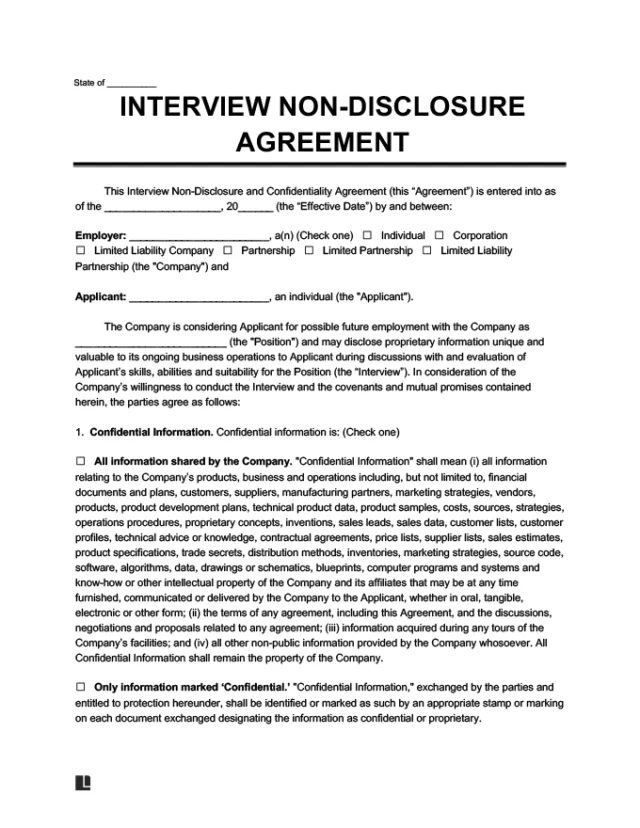
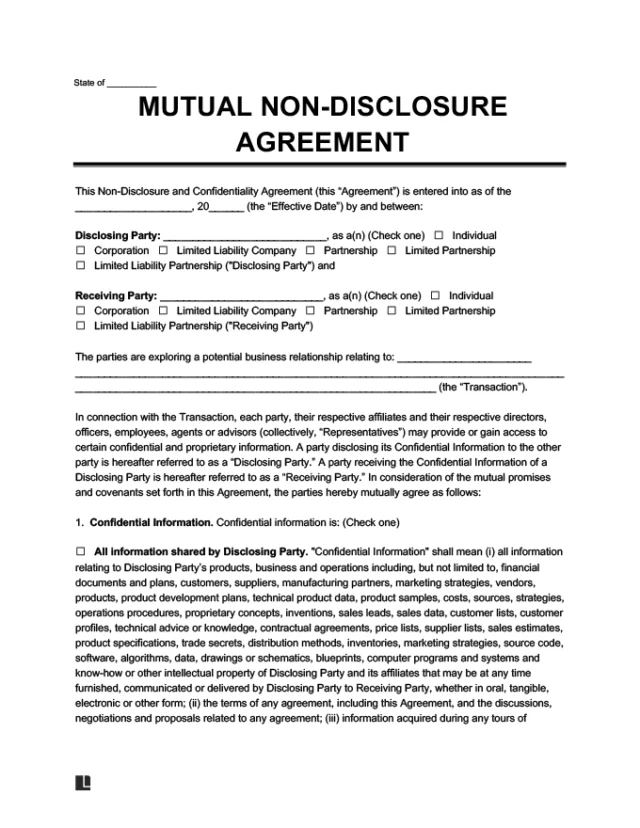
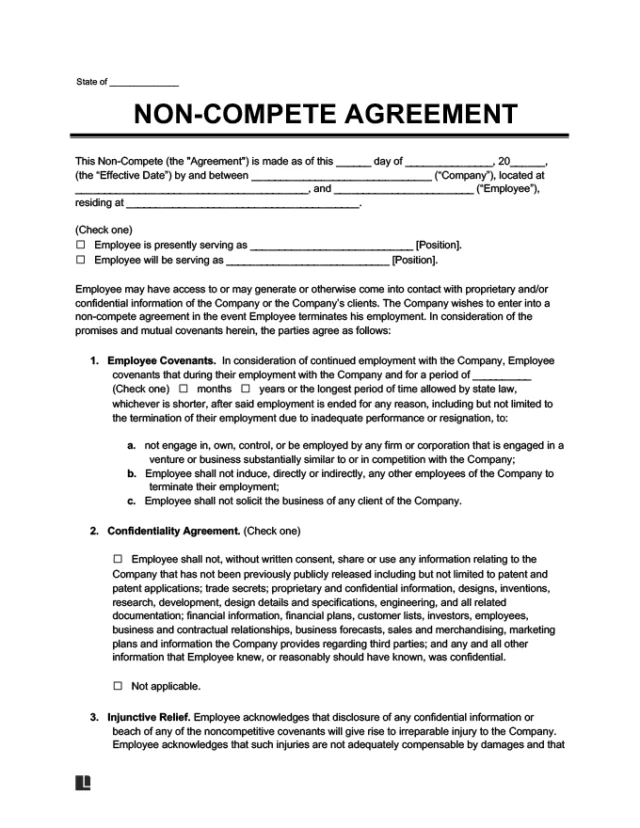
What Is an Employee Non-Disclosure Agreement?
An employee non-disclosure agreement (NDA) is a contract between an employer and an employee that keeps sensitive information private. It protects the company’s confidential material and limits how that information can be used or shared.
Employers often ask employees to sign NDAs at the start of a job or during employment. They can also come up later as part of a settlement, separation, or severance agreement.
The scope usually reaches beyond trade secrets. It can include anything shared in confidence and, in some cases, even details that feel routine or already known. The agreement covers both the use and disclosure of the protected information.
When Should I Use an Employee Non-Disclosure Agreement?
Use an employee NDA any time someone will see information that could hurt the business if it gets out. It sets expectations early and keeps sensitive details protected. Common situations where an employee NDA helps:
- Hiring someone who will handle sensitive data
- Promoting an employee to a role with more access
- Bringing in contractors, interns, or temporary workers
- Starting a collaborative project
- Speaking with potential partners or vendors before a contract
- Giving access to internal systems or databases
- Sharing product designs, prototypes, or launch plans
- Discussing strategy, mergers, or acquisitions
Protected information covers anything that gives your business an edge. It can be a unique formula, a new design, intellectual property, marketing plans, or client details. It also includes internal reports and proprietary data. If the information matters, it belongs under an NDA.
Some NDAs are mutual, while others only bind one party. Learn the difference in our guide, What Is the Difference Between Bilateral and Unilateral Contracts?.
Are Employee NDAs Enforceable?
Employee non-disclosure agreements can be enforceable if they’re well-written, signed, and backed by clear consideration. Courts decide if the scope, duration, and restrictions reasonably guard genuine business interests, such as trade secrets.
They’re less likely to hold up if they’re vague, overly broad, or try to cover public information or third-party data. The same applies if the consideration is unclear, the terms create a major power imbalance, or they require illegal acts, like hiding fraud or harassment. Federal law also shapes how NDAs work.
- The FTC’s 2024 ban on most non-competes has led more employers to rely on NDAs.
- The 2022 Speak Out Act blocks the enforcement of NDAs and non-disparagement clauses signed before sexual assault or harassment disputes.
- Whistleblower laws allow employees to report violations confidentially or anonymously.
State laws add another layer. Some treat employee NDAs like non-competes, including California and Wisconsin. The Uniform Restrictive Employment Agreement Act (2021), introduced in Colorado, Oklahoma, North Carolina, Vermont, and West Virginia, also narrows how NDAs can be used by limiting them to truly confidential information.
What Should I Include in an Employee NDA?
An employee NDA should be clear, specific, and built to protect the company without overreaching. Each section needs a purpose, and each one should support how you manage and protect confidential information. Key parts include:
- Define confidential information by explaining exactly what it covers, such as trade secrets, proprietary data, and knowledge gained through the role that gives the company an advantage.
- State the purpose so it’s clear that the employee NDA exists to protect confidential information, trade secrets, and the company’s competitive position.
- Outline employee obligations for both during and after employment, making clear that confidential information cannot be used or disclosed after leaving.
- Set the duration with common terms of one to five years post-termination, while protecting trade secrets indefinitely.
- Explain consideration by stating what the employee receives in return for signing, such as a job offer or continued employment.
- Keep the scope reasonable and limit it to what’s relevant for the role, adding geographic limits only if necessary.
- List consequences for breach that could include termination, injunctions, damages, or covering legal fees.
- Address property return or destruction by requiring all company property and confidential materials to be returned or destroyed when employment ends.
- Add standard legal clauses such as governing law, integration, and severability to make the NDA complete and enforceable.
A fair and properly written employee non-disclosure agreement keeps sensitive information secure and sets firm boundaries for employees.
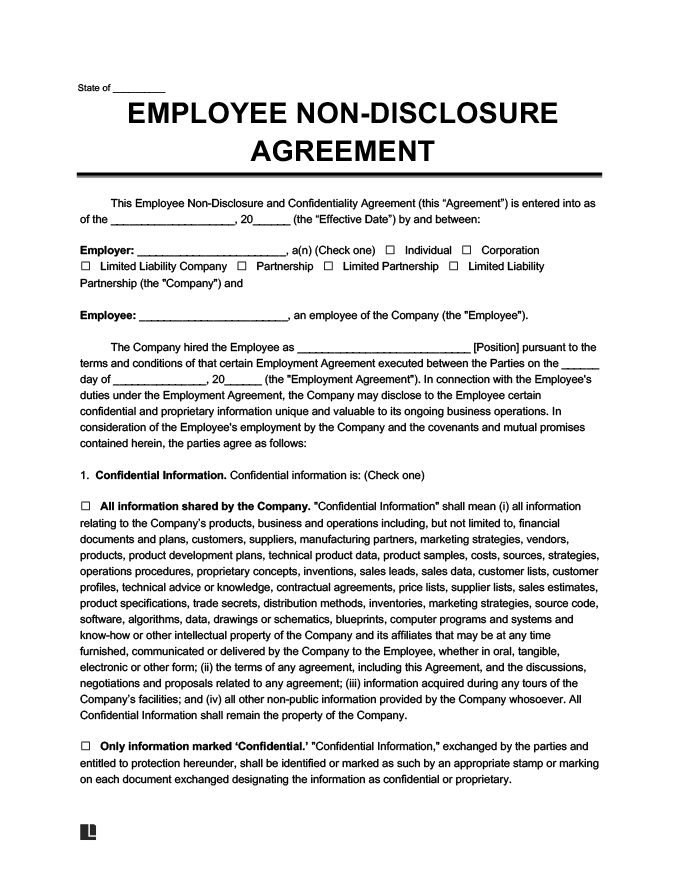
Sample Employee Non-Disclosure Agreement
Take a look at the sample below to see what an employee NDA includes. When you’re ready, customize it to meet your needs and then download it in PDF or Word.