What Is a Texas Power of Attorney?
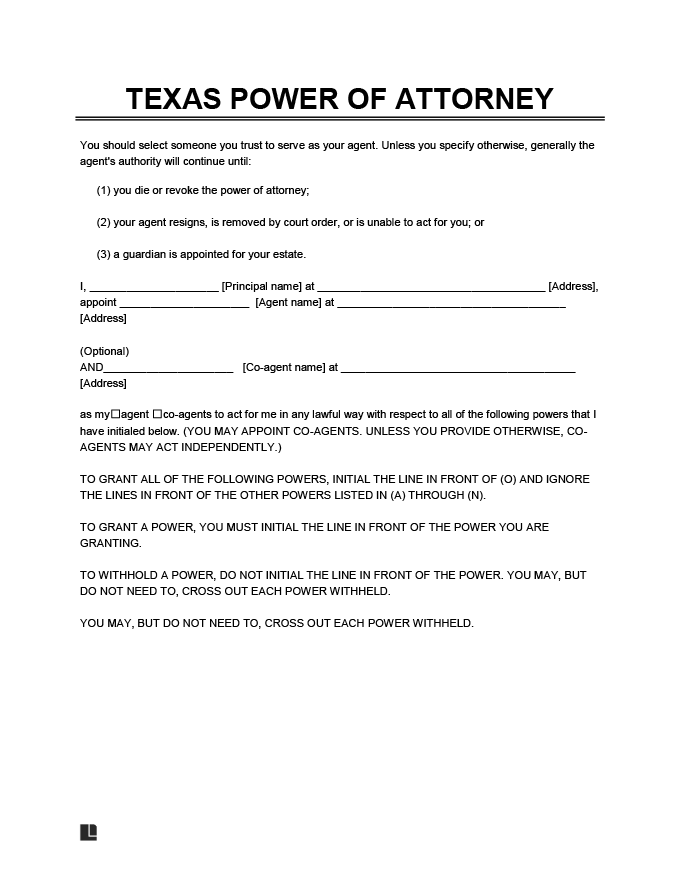
A Texas power of attorney is a legal document that grants a person the authority to make decisions on behalf of another individual. As the principal, you can choose the agent’s ability to decide on matters related to property, finances, or medical issues.
Anyone who’s at least 18 and of sound mind can create a power of attorney in Texas. This document helps the principal prepare for the unexpected. By writing it in advance, they can ensure that they approve someone to act on their behalf if needed.
Types of Powers of Attorney in Texas
Different types of Texas powers of attorney help you prepare for various situations. Explore the essential types so you know which one is right for your estate planning goals.
Durable vs. Non-Durable
Durable and non-durable powers of attorney in Texas differ in terms of when they end. A durable POA lasts through the principal’s incapacity. Even if a principal loses the ability to act, the agent keeps their decision-making authority.
If you prefer that the agent lose their power in the event you develop an incapacity, you can opt for a non-durable power of attorney in Texas.
Texas law requires the principal to specify durability. Unlike other states, Texas POAs are not automatically presumed to be durable (TX Est Code § 751.0021).
Medical
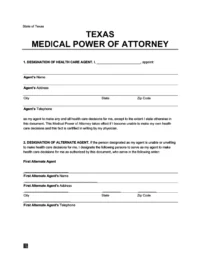
A medical power of attorney lets the principal choose someone to oversee their medical decisions. If the principal becomes unable to act, the agent can decide on their medical care, treatments, and medications. TX Health & Safety Code § 166.152 oversees the creation and enforceability of medical powers of attorney in Texas.
Financial
A financial power of attorney is often durable and allows the agent to make key financial decisions. The powers can be broad or specific. Some powers that an agent can grant or restrict include the following:
- Buying and selling property
- Opening bank accounts
- Paying bills
- Withdrawing money from accounts
- Making investments
Durable (Financial)
Remains in place even if you become incapacitated.
Signing Requirements: Notary public (§ 751.0021).
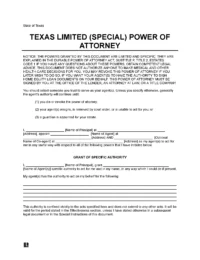
Limited (Special)
Authorizes an agent to manage specific, explicitly stated matters on behalf of the principal.
Signing Requirements: Notary public (§ 751.0021).
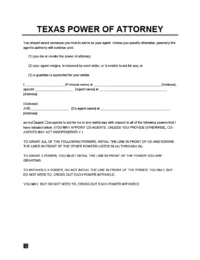
Non-Durable (General)
Allows an appointed agent to manage your business and financial affairs.
Signing Requirements: Notary public (§ 751.0021).
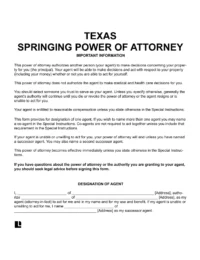
Springing
“Springs” into effect in a certain situation (such as if you become incapacitated), and ends at a time you specify.
Signing Requirements: Notary public.
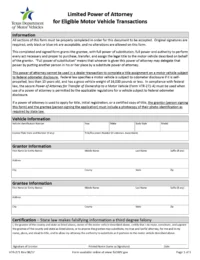
Vehicle (Form VTR-271)
Appoint an agent to represent them in decisions relating to vehicles, including transfer of ownership.
Signing Requirements: Vehicle owner only.
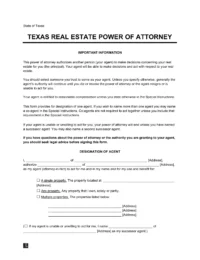
Real Estate
Restricts an agent to acting on issues relating to the principal’s property.
Signing Requirements: Notary public.
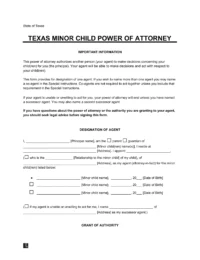
Minor (Child)
Authorizes a third party to take parental responsibility for a child.
Signing Requirements: Notary public.
How to Write a Power of Attorney in Texas
A power of attorney in Texas conveys the principal’s wishes and makes it clear what powers they grant to and withhold from the agent. Explore the steps involved in writing your Texas power of attorney form:
- Name the principal and agent: Give the names and addresses of the principal and agent. List any co-agents or successor agents if applicable.
- Grant general powers: You can grant general powers with respect to real property (TX Est Code § 752.102), tangible property (TX Est Code § 752.103), stocks (TX Est Code § 752.104), and other matters.
- Assign special powers: Some powers don’t fall under the “general” category. Instead, the principal must explicitly grant them, per TX Est Code § 752.052.
- Establish the effective date: Your power of attorney will become effective upon the principal’s signature being acknowledged, unless otherwise specified.
- State the durability: Your Texas POA will automatically be non-durable unless you state otherwise.
- Sign: Only the principal (not the agent) has to sign the document to execute it.
Texas Power of Attorney Legal Requirements and Considerations
While you can customize a Texas power of attorney to meet your needs, it still must follow state requirements. Learn about the state-specific considerations below.
Notarization
Notarization is required to execute a Texas power of attorney (TX Est Code § 751.0021). You can use Legal Templates’s notary acknowledgment form to get the proper acknowledgment.
Filing
In most cases, you don’t need to file or record a power of attorney in Texas. The only time you may need to record this document is when you are transferring property ownership. In these instances, you can record the POA with the county clerk’s office of the property’s location.
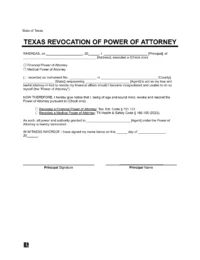
Revocation
A durable power of attorney will terminate in the following instances (TX Est Code § 751.131):
- The principal dies
- The principal revokes their POA
- The POA states that it terminates
- The goal of the POA is fulfilled
- The principal becomes incapacitated (unless the document is durable)
- One of the circumstances outlined in § 751.132(a)(1), (2), or (3) applies to an agent, and the POA doesn’t grant authority to another agent
- A permanent guardian of the estate of the principal has qualified to serve in that capacity as provided by § 751.133
An agent’s authority under a durable POA ends when any of the following statements are true (TX Est Code § 751.132):
- The principal revokes the agent’s authority
- The agent dies
- The agent becomes incapacitated or is no longer qualified
- The agent resigns
- The agent’s marriage to the principal ends by divorce or annulment (or a void declaration by the court), unless the POA provides otherwise
- The POA terminates due to the principal’s incapacity or otherwise