What Is a Virginia Power of Attorney?
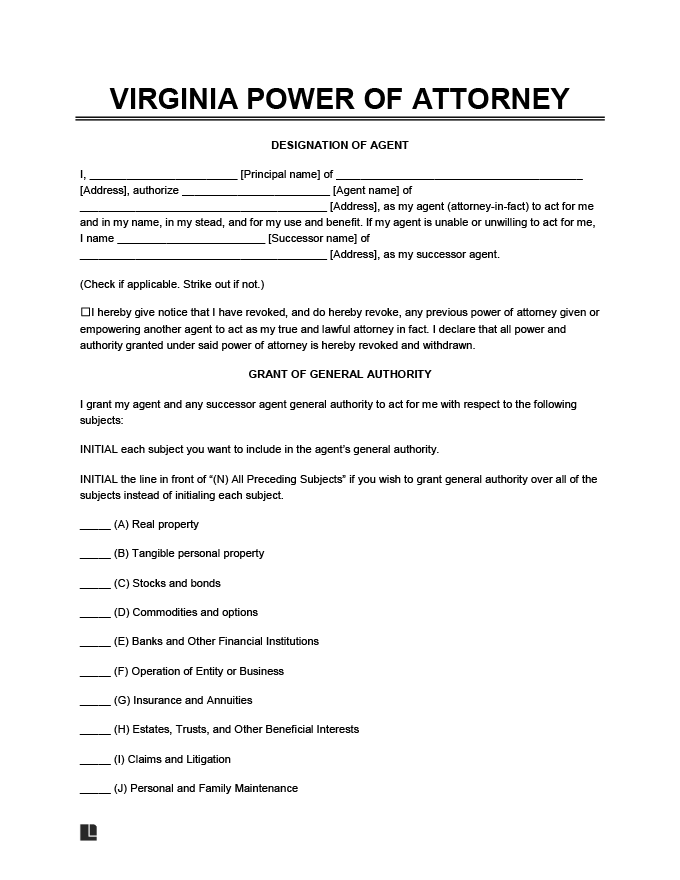
A Virginia power of attorney (POA) is a legal document used by the principal to appoint an agent to make decisions or handle their affairs. This form outlines the abilities and limits of the agent to protect your interests. In Virginia, a power of attorney form must meet the requirements and terms of the Uniform Power of Attorney Act.
Legal Templates’ free Virginia power of attorney template includes state-compliant terms. Use our forms to create a POA that meets your needs.
Types of Power of Attorney in Virginia
Using a specific power of attorney form makes it easier to target your desired terms. Consider the various types of POAs to create an agreement tailored to your particular situation.
Durable vs. Non-Durable
Virginia offers both durable and non-durable POAs. In a durable agreement, the principal maintains their authority after the principal’s incapacitation. A non-durable POA revokes the agent’s powers when the principal becomes incapacitated.
According to VA Code § 64.2-1602, all Virginia power of attorney contracts are assumed to be durable unless stated otherwise. Create a non-durable arrangement by including a statement ending the agent’s authority upon your incapacitation.
Financial
When you need someone to handle your finances, a Virginia financial POA provides more specific terms. With a financial POA, you can select from the following duties for your agent:
- Access to bank accounts
- Authority for investments
- Management of personal property
- Ability to manage real property
- Control of insurance benefits
- Authority to file taxes
Medical
A Virginia POA can also focus on the agent’s ability to handle your medical care and decisions. You can also include or limit agent authorities and use an advance directive or living will to communicate your preferences. Consider giving your agent the following powers for a medical power of attorney:
- Consent to or refuse treatments
- Ability to authorize treatment and medications
- Authority to hire and fire health care staff
- Power to decide on end-of-life care
Durable (Financial)
Remains in place if you become incapacitated.
Signing Requirements: Notary public (§ 64.2-1603).
Medical
Advance directives such as living wills and medical powers of attorney are written, legal instructions on how you wish your medical care to proceed if you are unable to make such decisions for yourself.
Signing Requirements: Two witnesses (§ 54.1-2983).
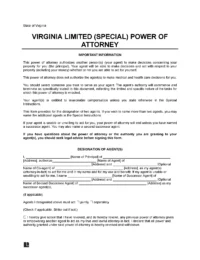
Limited (Special)
Use for specific tasks, sign only against the powers you wish to transfer to your agent.
Signing Requirements: Notary public (§ 64.2-1603).
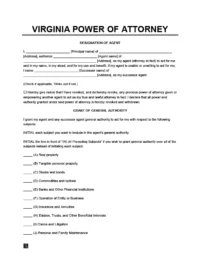
Non-Durable (General)
Assign broad powers over a principal’s affairs to an agent.
Signing Requirements: Notary public (§ 64.2-1603).
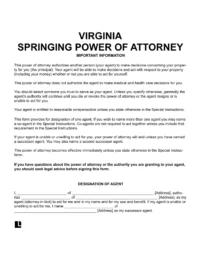
Springing
“Springs” into effect in a certain situation, and ends at a time you specify.
Signing Requirements: Notary public.
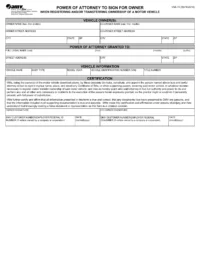
Vehicle (Form VSA-70)
Choose a trusted agent to handle vehicle-related transactions on your behalf.
Signing Requirements: Principal only.

Real Estate
Assign someone to act in your best interests relating to your property affairs.
Signing Requirements: Notary public.

Minor (Child)
Assign someone to make decisions for your child and act in their best interest.
Signing Requirements: Notary public.
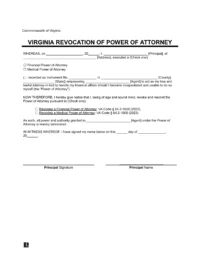
Revocation
Retract any previously assigned authority by officially rescinding the agent's power of attorney.
Signing Requirements: Notary public.
How to Write a Power of Attorney in Virginia
Writing a Virginia power of attorney requires you to consider your desired terms and meet state requirements. Use the following steps to create an effective POA that protects your interests:
- Name the parties involved: Record the full legal names and addresses of the principal and agent.
- Grant general authorities: Select which general powers you want your agent to exercise. General authorities include access to bank accounts, medical records, personal property, and investments.
- Provide special powers: Include a statement authorizing the agent to use any special powers. Under VA Code § 64.2-1622, special powers include handling trusts, gifts, and beneficiaries.
- Set the effective date: Determine when you want your agreement to go into effect. According to VA Code § 64.2-1607, all POAs are effective at the time of signing unless stated otherwise.
- Determine durability: Clearly establish whether your arrangement is durable or non-durable. Provide a statement either extending or ending the agent’s authority at the time of your incapacitation. If you do not specify otherwise, the agreement is presumed to be durable.
- Sign and file: Gather signatures, including the principal, agent, and witnesses or notary. A notary signature is required for powers of attorney in Virginia. Also, keep and distribute copies of the agreement as needed.
Virginia Power of Attorney Legal Requirements and Considerations
A Virginia power of attorney must meet the state’s legal requirements to be considered valid. Consider the proper information, filing, and terms to ensure your agent can act in accordance with your wishes.
Notarization
Per VA Code § 64.2-1603, a power of attorney must be acknowledged by a notary public for the signatures to be presumed genuine. Having your document notarized ensures its legal validity and gives your agent the authority to act on your behalf. An advanced directive or medical power of attorney may count as valid with the signature of two witnesses, as noted in VA Code § 54.1-2983.
Filing
Virginia POAs have no formal filing requirements unless the agent plans to make real estate transactions on the agent’s behalf. In this case, the POA must be filed in the circuit court of the county where the property is located. Financial or medical institutions may also request a copy to verify the agent’s abilities.
Revocation
Set the revocation terms of your POA to determine when the agent’s authority expires. Some agreements will end automatically according to the contract’s terms. Other methods include a written or legal revocation process. Per VA Code § 64.2-1608, the following events end an agent’s authority:
- Principal’s death: In a durable POA, the agent keeps their powers during the principal’s incapacitation and ends their authority at the time of the principal’s death.
- Principal’s incapacitation: With a non-durable POA, the principal’s incapacitation automatically revokes the agent’s abilities.
- Principal revocation: The principal may provide written notice of revocation to the agent at any time. This notice terminates the agent’s authority to act and ends the agreement.
- POA’s purpose is fulfilled: Some powers of attorney focus on one specific purpose, transaction, or period. In these agreements, the terms should state an automatic end of powers once the expressed purpose has been completed.
- Divorce filing: In cases where the principal’s spouse acts as the agent, filing for divorce terminates the POA agreement.
- Agent’s conviction: If the agent is convicted of financial exploitation of the principal, the POA will terminate according to the guidelines of VA Code § 18.2-178.2
According to VA Code § 64.2-1608(E), any actions taken in good faith by the agent before they become aware of the POA’s termination remain valid.