What Is a Sales Agreement and Why Does It Matter?
A sales agreement is a legally binding contract between a buyer and a seller that describes a transaction of services or goods. It outlines the details of the deal and can be written by either side. The agreement might cover a present sale, where ownership transfers right away, or a future sale, where it transfers later.
Many people call it a sales contract or a sale of goods contract. Under the Uniform Commercial Code (UCC), which most states follow, it’s defined as a “contract for sale.” A sale of goods contract usually includes:
- Who’s involved, what’s being exchanged, and the agreed price.
- Payment terms, delivery details, liability, and warranties.
A sales agreement contract gives both sides written proof of the deal and makes their responsibilities clear. If payments are missed, goods are defective, or deliveries fall through, the agreement explains what should happen next. It also gives lenders, insurers, and regulators the assurance they often need before approving a transaction.
When Should You Use a Sales Agreement?
Use a sales agreement when a purchase involves higher value, added services, delayed delivery, or other terms that require clear written expectations. Common situations include:
- Buying or selling vehicles, animals, appliances, or equipment
- Selling goods that include services, such as installation
- Deals where delivery or payment happens later
- Bulk purchases between businesses and suppliers
- Situations where liability transfers from one party to another
For small, everyday purchases where ownership transfers right away, a formal sales agreement usually isn’t needed.
Other documents may fit better depending on the situation. A real estate deal, for example, calls for a purchase and sale agreement. And if you’re selling a business, you’ll need a business bill of sale.
How to Write a Sales Agreement
A strong sale starts with clear written terms. That’s why each section of a sales agreement needs careful attention, from identifying the parties to defining payment, delivery, and warranties.
1. Use a Sales Contract Template
A sales contract template sets out the key terms, who’s involved, the price, delivery, and risk. For sales of goods worth $500 or more, the Statute of Frauds requires a written contract to make an action or defense enforceable in court, which makes putting it in writing essential. With Legal Templates, you can quickly create a sales agreement that covers every detail and protects both sides.
2. Identify the Buyer and Seller
List the full legal names and addresses of the buyer and seller exactly as they appear on government records. This confirms who is legally bound by the contract and helps prevent disputes about responsibilities.
3. Describe the Goods
Provide clear details about the goods in your sales agreement, such as the make, model, year, serial number, VIN, or hull number. State the condition, quantity, and anything included in the sale. For example, when selling equipment, list any attachments or accessories that transfer with it.
4. Set the Purchase Price and Taxes
Write the purchase price in exact numbers, then note whether sales tax or excise tax applies and who needs to pay it. If the purchase is financed, include both the upfront amount and the amount being financed.
5. Define Payment Terms
State the method of payment, such as wire transfer or certified check. If the purchase will be paid in installments, list each due date and amount. Include what happens if a payment is missed, such as late fees or forfeiture of the goods.
6. Explain Delivery and Transfer of Risk
State if the seller will ship, deliver, or require the buyer to collect the goods. Specify the exact point when the risk of loss shifts. For example, “risk transfers to the buyer once the goods are loaded for shipment” or “risk transfers upon delivery at buyer’s premises.”
7. Include the Buyer’s Right to Inspect
If inspection is allowed, state the inspection period and the consequences if the goods fail inspection. For example, “Buyer may inspect the goods within 24 hours of delivery and reject them by written notice if they do not meet the specifications.”
8. Add Warranties or “As Is” Language
If the goods are sold “as is,” state that clearly. If warranties apply, describe them in detail, such as: “Seller warrants that the goods are free of liens, the seller has clear title, and the goods are fit for ordinary use.” Include the length of warranty coverage.
9. Confirm the Seller Owns the Goods
Confirm in writing that the seller owns the goods outright and that no liens, security interests, or competing claims exist. This protects the buyer against ownership disputes.
10. Address Cancellation and Default
Explain when either party can cancel and how to do it. Also, describe what happens if someone does not follow the agreement, such as the seller keeping a deposit or paying damages for failing to deliver.
11. Choose the Governing Law
Name the state or country whose laws apply to the agreement. This is especially important for interstate or international sales, so both sides know which rules apply if a dispute happens.
12. Explain How Disputes Will Be Resolved
Explain the process for resolving disagreements. This can include requiring the parties to try mediation or binding arbitration before going to court.
13. Sign and Date the Agreement
Provide signature lines for both parties with printed names and dates. Without signatures, the agreement isn’t enforceable.
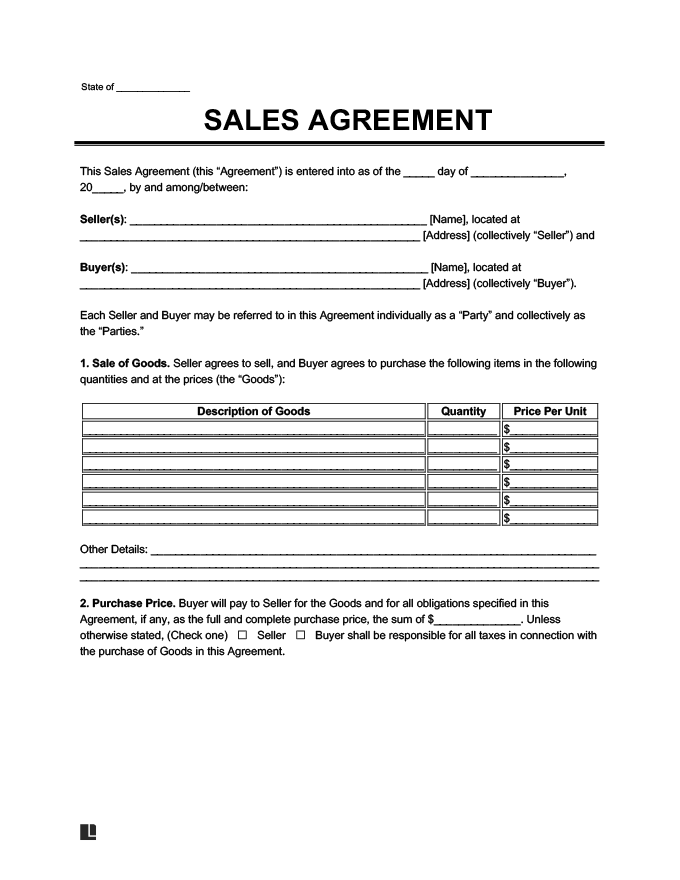
Sample Sales Agreement
Take a look at the sample sales agreement below to see how it’s structured. Then customize and download your own sales contract template in Word or PDF.